A Personal Pilgrimage

Published / by Jehangir

Recently I helped the ZAKAT Trust organise a free medical camp at Khrew. The camp was a great success and around a thousand people including families from remote areas were able to take advantage of the facilities provided at the camp. For the first time in Kashmir, super-specialist consultations, sophisticated investigations and free medicines were available in a mobile medical camp.

On a personal level the trip to Khrew turned out to be serendipitous. Our gracious host Yawar Masoodi guided me to a cave on a hillock at Ladhoo where Sheikh Nur-ud-Din Wali meditated for more than a dozen years. The fifteenth-century mystic popularly called Sheikh-ul-Alam or Alamdar-e-Kashmir (the Standard Bearer of Kashmir) is the patron saint of Kashmir.


There is one God
but with a hundred thousand names
every single blade of grass
worships Him
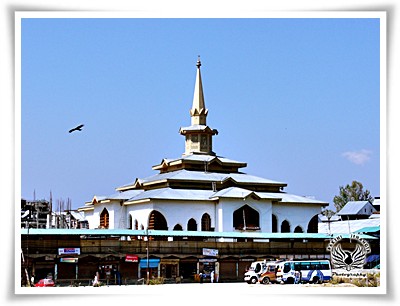

Sheikh-ul-Alam's shrine at Chrar-e-Sharif


A rocky path leads down from the cave to a small hut where another famous mystic called Lassa Sahib used to meet his devotees.

My family had connections with both these spiritual guides and so the trip became a personal pilgrimage of sorts.

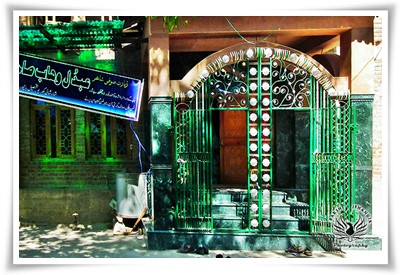
Our next stop was Wahab Sahib's shrine at a picturesque spot among the forested foothills of the Wastarwan Hill, a couple of kilometres from Shar Shali vilage.

Wahab Khar (1842-1910) was an illiterate blacksmith who also happened to be an accomplished mystical poet. 'Mehrajnama' and 'Maach Tulir' are his famous works.

'Athi chhu Wahab Khar ti lajawab' is an adage that testifies to his status.


Kam kam Suleiman aaye matyo
kati Haatim Tai
dorah karith draiy matyo
jai kathyo chi
In the hills above Mandakpal village near Ladhoo is a shrine with a clear water spring dedicated to another famed poet-mystic, Niyami Sahib.

Just below the hillock at Ladhoo are impressive ruins of a temple tank complex labeled as Sandyasar Nag and Sun Temple on Wikimapia.

Ram Chandra Kak, in Ancient Monuments of Kashmir, considers the temple to be the first of its kind and the forerunner of the elaborate Avantiswami and Martand Temples. Nag-gaad (fish) abound in the temple tank and I saw an unusual white fish with a black head swimming among bathers in the tank.


The Jwalamukhi temple at the top of the small hillock near Wuyan is dedicated to the Goddess of Fire. Mela Jwalamukhi is celebrated on the 14th day of Shravan (July–August) at the temple. According to residents, Mela Jwalamukhi is the second most important mela for pilgrims after Mela Khir Bhavani.

A sacred spring called Damodar Nag at Khonmoh and ancient rock carvings at Bunshwar are other places of archaeological interest in the area.

Shikargah, the erstwhile hunting preserve of the Maharajas of Kashmir and the Greater Dachigam area as well as the Wastarvan forests can be developed as prime camping/trekking/hiking destinations to complement the immense potential for pilgrimage tourism in the area. Two issues will need to be taken care of beforehand.

The first is the seemingly random stone quarrying that is leaving huge scar marks on the pristine hills.

The second issue is the increasing pollution from the cement factories in the Wuyan/Khonmoh belt which has the makings of a major environmental disaster.

On some days the whole area is shrouded in a grey haze, and there are reports of increasing pollution-related health problems. To complicate things further, the area is also home to the critically endangered Hangul, the official State Animal of J&K and the only Red Deer species in Asia.


Jwalamukhi Temple is barely visible through the haze generated by cement factories.

Incidentally this shared concern for the dwindling Hangul habitat laid the foundations of my friendship with Yawar. There are signs that he may assume a more public role in the coming years. That is indeed a ray of hope in the gloom (quite literally, as is evident from the photograph of the Jwalamukhi Temple).

Stay blessed, my friend.

Of Conservationists and Environmentalists

Published / by Jehangir

I was recently asked whether I was a conservationist or an environmentalist. I must confess that I had not given much thought to the difference between the two. I have since sought to enlighten myself and want to share some thoughts with my readers.

Apparently conservationists believe in scientifically managed use of natural resources while environmentalists maintain that "nature knows best" and our remaining wildernesses should be left unmanaged for anything except primitive recreation. They believe human intervention is generally harmful to natural resources.

As for myself, I have somewhat of a split personality while it comes to managing our natural resources. At heart I am a hard-core environmentalist. For example, I am appalled at plans to convert the Bangus Valley into a major tourist resort.

Having trekked through Bangus in happier times, the thought that this untamed paradise will soon be commercialised into a Pahalgam-like circus like torments my soul. I hope that a saner voice will call for preservation and the 'powers-that-be' shall listen.

However my optimism is tempered with a strong streak of realism. Political opportunism – combined with the fact that economic backwardness forces people in rural areas to jump on to the tourism bandwagon – means that areas like the Bangus Valley are doomed to progress.

Kashmir is a small valley with an exponentially increasing population and the pressure on our natural resources like land and water is immense. Even the most die-hard environmentalist must concede that commercialisation is inevitable, so the logical next step is to ensure that at least it is managed properly.

That, my friends, is the conservationist point of view – to which I am a reluctant subscriber.

Repost from WildKashmir

The Seeker of Words

Published / by Jehangir

Yet again, its that time of year.

Wahrat-triggered insomnia crumbles my resistance and today, yet again, I must succumb to this irresistible urge to inflict my translations upon innocent stumblers-upon.

Sadly, it is Faiz Ahmed Faiz who today, yet again, has to suffer this posthumous ignominy – but that is just the way it is.

Aaj Ek Harf Ko – Faiz Ahmed Faiz

aaj ek harf ko phir dhoondta phirta hai khayal

madh bhara harf koi, zeher bhara harf koi
dil-nashin harf koi, qeher bhara harf koi

aaj ek harf ko phir dhoondta phirta hai khayal…

harf-e-ulfat koi dildar-nazar ho jaise
jis se milti hai nazar bosa-e-lab ki surat
itna roshan ke sare-mauja-e-zar ho jaise
sohbat-e-yaar main aghaaz-e-tarab ki surat
harf-e-nafrat koi shamsheer-e-ghazab ho jaise,

aaj ek harf ko phir dhoondta phirta hai khayal…

ta abad shahre-sitam jis se tabah ho jayein
itna tareek ke shamshan ki shab ho jaise
lab pe laoon to mere honth siyah ho jayein
aaj ek harf ko phir dhoondta phirta hai khayal…

Here goes…

today, yet again, my thoughts wander seeking a word

an intoxicating word, a venomous word
a bewitching word, a wrathful word

today, yet again, my thoughts wander seeking a word

a word of desire that brings to mind my beloved's glance
meeting my gaze like a kiss on the lips
as radiant as the crest of a wave of gold
like the first stirrings of ecstasy in a lovers tryst
a word of hate slicing like a fearsome sword

today, yet again, my thoughts wander seeking a word

a word that shall destroy these flourishing cities of oppression
a word as dark as the dusk over a cremation ground
a word that, if uttered, shall turn my lips black

today, yet again, my thoughts wander seeking a word

Strangely enough, it is Faiz Ahmed Faiz, and not Ghalib, whose poems feature most on my blog, even though the latter is my favourite poet.

Shashi Kapoor, who self-confessedly did not know a single word of Urdu, did an amazing job in this version of Aaj Ek Harf Ko featured in Merchant-Ivory's Muhafiz/in Custody.

Enjoy !