Have you ever Kippled?

Published / by Jehangir

This post features three of my favourite authors, albeit in a less than laudatory fashion.

Sir Arthur Conan Doyle wrote four novels and 56 stories featuring the fictional detective Sherlock Holmes. They were so wildly popular that a century-and-a-quarter later his creation is the most adapted character in literary history as well as the most played character in cinematic history. Even today Sherlock Holmes receives mail by name at his famous address, 221B Baker Street, as though he were an actual person!

How often have I said to you that when you have eliminated the impossible, whatever remains, however improbable, must be the truth?

An example of Doyle's success in creating a analytical mastermind with unmatched deductive powers is the passage where the fictional Sherlock Holmes deduces Dr. Watson's professional and service background:

Here is a gentleman of a medical type, but with the air of a military man. Clearly an army doctor, then. He has just come from the tropics, for his face is dark, and that is not the natural tint of his skin, for his wrists are fair. He has undergone hardship and sickness, as his haggard face says clearly. His left arm has been injured. He holds it in a stiff and unnatural manner. Where in the tropics could an English army doctor have seen much hardship and got his arm wounded? Clearly Afghanistan.

Pure genius !

Unfortunately the coldly analytical first-and-only 'consulting detective' could not decipher the impossibility of a name like Mahomet Singh in 'The Sign of the Four' (1890).

In 1907, Rudyard Kipling became the first English-language recipient of the Nobel Prize for Literature. The prize citation said: 'In consideration of the power of observation, originality of imagination, virility of ideas and remarkable talent for narration which characterize the creations of this world-famous author.'

Of his childhood in India Kipling wrote that '…one spoke 'English', haltingly translated out of the vernacular idiom that one thought and dreamed in'.

Of his return to India at the age of seventeen years, '…my English years fell away, nor ever, I think, came back in full strength'

Ironically for a man who vaunted his connection with India, his writings were considered paeans to Victorian empire-building in his lifetime, and later discredited as imperialistic propaganda with racial overtones. Case in point :

'The White Man's Burden' (1899)

Take up the White Man's burden-
Send forth the best ye breed-
Go, bind your sons to exile
To serve your captives' need;
To wait, in heavy harness,
On fluttered folk and wild-
Your new-caught sullen peoples,
Half devil and half child.

In 1890, our self-confessed thinker-in-the-vernacular titled a famous poem 'Gunga Din'.

'Tho' I've belted you and flayed you,
By the livin' Gawd that made you,
You’re a better man than I am, Gunga Din
!'

Gunga Din, indeed.

Messrs. Doyle and Kipling may be forgiven for their lapses made over a century ago, but what of our next storyteller?

Jeffrey Archer has topped the bestseller lists around the world, with hundreds of millions of books sold in a hundred countries and some novels nearing a hundred reprints (Kane & Abel). He has also authored plays, collections of short stories, prison diaries, and religious works. He is the only writer ever to have been a number one bestseller in fiction, short story and non-fiction categories.

In a short story titled ‘The Commissioner‘ in ‘Cat O’Nine Tales‘ (2006), one vital character is a Deputy Commissioner of Mumbai Police with the mutually exclusive name of ‘Anil Khan‘. In ‘Politically Correct‘ published in the collection ‘And Thereby Hangs a Tale‘ (2010), we have ‘Professor Naresh Khan, the distinguished American orthopaedic surgeon‘. Maybe they really do things differently in the USA.

Did each one of these grandees feel that even a wee bit of research on ‘sullen peoples‘ was not worth his time or effort?.

Their stand-offishness is the reason why the legacy of the British, unlike that of earlier rulers, was not assimilated into the Indian narrative. Unsurprisingly their rule sired the bastard Hinglish in contrast to the incomparably symbiotic Urdu.

Coming back to the intro, nominal gaffe's notwithstanding, all three are favourite authors, with the best piece of writing being Rudyard Kipling's four stanzas of advice to his son:

If

If you can keep your head when all about you
Are losing theirs and blaming it on you,
If you can trust yourself when all men doubt you,
But make allowance for their doubting too;
If you can wait and not be tired by waiting,
Or being lied about, don't deal in lies,
Or being hated, don't give way to hating,
And yet don't look too good, nor talk too wise:

If you can dream – and not make dreams your master;
If you can think – and not make thoughts your aim;
If you can meet with Triumph and Disaster
And treat those two impostors just the same;
If you can bear to hear the truth you've spoken
Twisted by knaves to make a trap for fools,
Or watch the things you gave your life to, broken,
And stoop and build 'em up with worn-out tools:

If you can make one heap of all your winnings
And risk it on one turn of pitch-and-toss,
And lose, and start again at your beginnings
And never breathe a word about your loss;
If you can force your heart and nerve and sinew
To serve your turn long after they are gone,
And so hold on when there is nothing in you
Except the Will which says to them: 'Hold on!'

If you can talk with crowds and keep your virtue,
Or walk with Kings – nor lose the common touch,
If neither foes nor loving friends can hurt you,
If all men count with you, but none too much;
If you can fill the unforgiving minute
With sixty seconds' worth of distance run,
Yours is the Earth and everything that's in it,
And – which is more – you'll be a Man, my son!

~ Rudyard Kipling

I have kippled, and enjoyed it immensely !

Update: A pivotal character in Star Trek is called Khan Noonien Singh. WTF, Gene!
A Life Lesson from Balraj Sahni

Published / by Jehangir

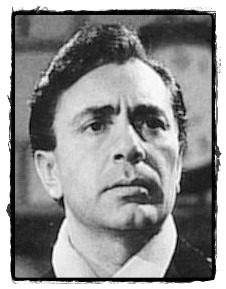
Balraj Sahni was one of my favourite actors of Hindi cinema. I feel all his roles had a kind of compelling sincerity.

Many people may not know that he was a noted progressive thinker and award-winning author with a strong connection to Kashmir.

An excerpt from his biography:

'Balraj's association with Kashmir, starting from the early thirties, was to become deep and intimate. Kashmir became for him a kind of second home. He revelled deeply in its idyllic surroundings, long hikes, long swims in the lakes, and mountain-climbing. Kashmir was to become for him a place of deep personal attachments. It was here that he wrote some of his charming little poems and stories. It was also to become a field for his cultural and literary activities in the years to come.'

In the same book, Bhisham Sahni also relates how his brother stunned an audience unsympathetic to the Kashmiri freedom struggle against the Dogra rule by making the following observation:

'Why, all the purse-strings in the state are either in the hands of the Maharaja or the Punjabi traders who do not belong here and who exploit the local inhabitants.'

An incident in Kashmir made a lasting impact on Balraj Sahni. He describes it in this excerpt from his convocation address at Jawaharlal Nehru University in 1972.

'I'd like to tell you about an incident which took place in my college days and which I have never been able to forget. It has left a permanent impression on my mind.

I was going by bus from Rawalpindi to Kashmir with my family to enjoy the summer vacation. Half-way through we were halted because a big chunk of the road had been swept away by a landslide caused by rain the previous night. We joined the long queues of buses and cars on either side of the landside.

Impatiently we waited for the road to clear. It was a difficulty job for the P.W.D. and it took some days before they could cut a passage through. During all this time the passengers and the drivers of vehicles made a difficult situation even more difficult by their impatience and constant demonstration. Even the villagers nearby got fed up with the high-handed behaviour of the city-walas.

One morning the overseer declared the road open. The green- flag was waved to the drivers. But we saw a strange sight. No driver was willing to be the first to cross. They just. stood and stared at each other from either side. No doubt the road was a make-shift one and even dangerous. A mountain on one side, and a deep gorge and the river below. Both were forbidding. The overseer had made a careful inspection and had opened the road with a full sense of responsibility. But nobody was prepared to trust his judgment, although these very people had, till yesterday, I accused him and his department of laziness and incompetence.

Half an hour passed by in dumb silence. Nobody moved. Suddenly we saw a small green sports car approaching. An Englishman was driving it; sitting all by himself. He was a bit surprised to see so many parked vehicles and the crowd there. I was rather conspicuous, wearing my smart jacket and trousers. "What's happened?" he asked me.

I told him the whole story. He laughed loudly, blew the horn and went straight ahead, crossing the dangerous portion without the least hesitation.

And now the pendulum swung the other way. Every body was so eager to cross that they got into each other's way and created a new-confusion for some time. The noise of hundreds of engines and hundreds of horns was unbearable.

That day I saw with my own eyes the difference in attitudes between a man brought up in a free country and a man brought up in an enslaved one. A free man has the power to think, decide, and act for himself. But the slave loses that power. He always borrows his thinking from others, wavers in his decisions, and more often than not only takes the trodden path.

I learnt a lesson from this incident, which has been valuable to me. I made it a test for my own life. In the course of my life, whenever I have been able to make my own crucial decisions, I have been happy. I have felt the breath of freedom on my face. I have called myself a free man. My spirit has soared high and I have enjoyed life because I have felt there is meaning to life.'

So there it is. A life lesson from Balraj Sahni.

Biography : Balraj, my brother (National biography series), by Bhishma Sahni. National Book Trust, India, 1981.
Autobiography: Link
1972 JNU Convocation Address : Link

Faiz Revisited

Published / by Jehangir

It is now officially a summer tradition.

On another hot humid sleepless night, I chanced upon an absolute gem of a poem and could not resist translating it mainly to simplify things for my own sake.

Enjoy the amazing imagery in this poem by (who else !) Faiz Ahmed Faiz.

tum jo na aaye the

tum jo na aaye the
toh har cheez wohi thi ke jo hai
aasmaan had-e-nazar
rahguzar, rahguzar
sheesha-e-mai, sheesha-e-mai

aur ab sheesha-e-mai, rahguzar, rang-e-falak
rang hai dil ka mere, khoon-e-jigar hone tak

champai rang kabhi, raahat-e-deedar ka rang
surmai rang kabhi, saat-e-bezaar ka rang
zard paton ka, zas-o-zaar kaa rang
surkh phoolon ka, dehekte hue gulzaar ka rang
zehar kaa rang, lahu rang, shab-e-taar ka rang

aasman, rahguzar, sheesha-e-mai
koi bheega hua daaman
koi dukhti hui rag
koi har lehza badaltaa hua aaina hai

ab jo aaye ho to thehro
ki koi rang, koi rut, koi shai
ek jagah par thehre
phir se ik baar har ik cheez wohi ho ke jo hai
aasmaan had-e-nazar
rahguzar, rahguzar
sheesha-e-mai, sheesha-e-mai

I have tried to keep my insomnia-fuelled translation close to the original and, owing as much to inability as to personal style, have eschewed clever turns of phrase, embellishments, and forced rhyming.

I very nearly dropped this post because "The Rebels Silhouette" has a translation by the incomparable Agha Shahid Ali. It may be akin to brandishing a candle at the sun, but with apologies to Shahid and other learned translators, here goes.

before you came

before you came
everything was just what it was

the sky as far as the eye could see
the road just a path to somewhere
the goblet just a glass of wine

and now
the goblet, the road, the sky
reflect the colours
of my heart’s blood
as it culminates in my liver

the colour of champa flowers
the colour of the comfort of seeing you
the colour of antimony
the colour of despondence
the colour of autumn leaves
the colour of thorns
the colour of crimson flowers
the colour of a rose garden in bloom
the colour of poison
the colour of blood
the colour of the dark night

the sky, the road and the goblet
a tear-drenched hem
a raw nerve
a mirror of ever-changing reflections

Now that you have come, stay
so each colour, every season, everything
stands still
and for once all things will again be just what they are ?

the sky as far as the eye can see
the road just a path to somewhere
the goblet just a glass of wine.

According to a report in The Guardian newspaper, ‘Rang Hai Dil Ka Mere’, has been included in the 50 best romantic poems of the world. ‘Rang Hai Dil Ka Mere’ is included in his collection ‘Dast-e-Tah-e-Sang’ and was recited in August 1963 in Moscow.