A Tale of Three Schools

Published / by Jehangir

Last week my elder son Jamshed had to make a 'school history' presentation for the benefit of younger students at assembly. While preparing his speech he asked me why our school was called Burn Hall School.

Flashback to the 70s …..

A favourite teacher asked our class the same question in primary school. Nursing a huge desire to impress said teacher, I tracked down a senior cousin during recess. It was very uncool to be tailed by a younger sibling in school but I was willing to risk public humilation for a higher cause. Luckily my cousin let me off lightly. 'Yaar, everyone knows the old school hall burnt down.'

The teacher, however, was not as kind.

'Dont be stupid, no school hall ever burnt down. Who told you this rubbish? Its named after a river in England.'

The flush of humiliation still rankles as does the memory of classmates sniggering at my embarrassment.

Cut to present day …..

Jamshed had gone through the history section of his school diary and the school website but could not find any clues to the peculiar name of the school.

I knowledgeably proposed the 'river' hypothesis omitting any mention of smart-alecky cousins or unsympathetic teachers. A quick bit of googling revealed that the school was not named after any particular river but for 'burn', a generic Scottish term for a smallish river or largish stream.

We also learnt that there was an Abbottabad branch of the Burn Hall School. Though there is no interaction between the two schools, they share a common history.

Quote:

The school is named after an English Manor House which had a hall with a stream (burn) running through it, hence the name 'Burn Hall'

My teacher having saved me from a second dose of embarrasment almost four decades later, we managed to put together the following sequence of events:

The Mill Hill Missionaries, officially known as the St. Joseph’s Missionary Society of Mill Hill, are a Catholic missionary society founded in 1866 at Holcombe House in the Mill Hill locality of north London.
Having expanded their missionary activities to South Asia in 1875, the Mill Hill Missionaries took charge of the mission to Kashmir in 1884.

After successfully establishing St. Joseph's School at Baramulla in 1905 they founded another school called the Senior Cambridge School at Srinagar in 1942.

The new school was started in the building which currently houses the College of Education (formerly the Teacher's Training College) at Maulana Azad Road. (Incidentally I have many happy memories of the Teacher's Training College and its heritage buildings, especially it's well-stocked library, which I could access by virtue of my mother being the Principal.)

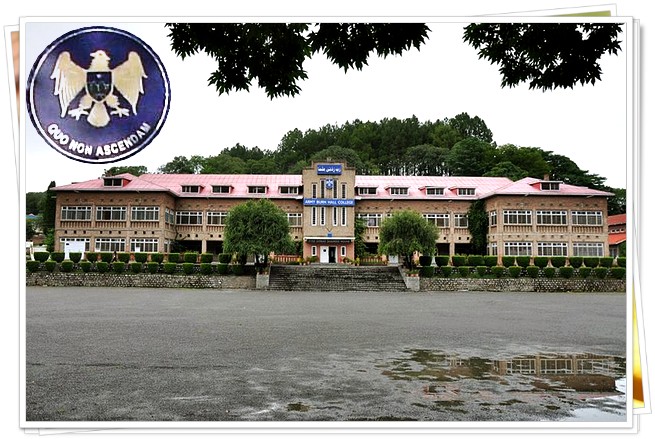
In the aftermath of the 1947 tribal invasion, the Mill Hill Missionaries moved to Pakistan and established a school called Burn Hall School in the Abbott hotel in Abbottabad under the Diocesan Board of Education, Rawalpindi.

The school motto was 'Quo non Ascendam', which in Latin means 'To what heights can I not rise.'
After a spell of nine years the Mill Hill Missionaries returned to re-establish their Srinagar school.

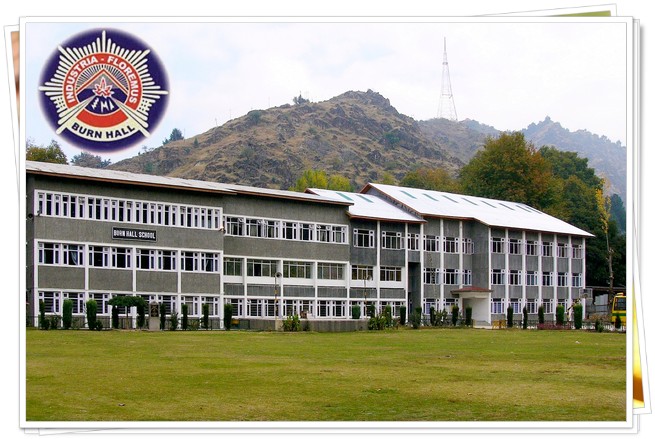
The new school, also called 'Burn Hall School', was started in April 1956 in a building called "The Willows" at Gupkar Road. Fr. J. Boerkamp was the founding father and the first Principal of the school which was established under the management of the Catholic Diocese of Jammu & Srinagar.

The school motto was 'Industria Floremus', which in Latin means 'In toil we shall flourish.'
The Mill Hill Missionaries managed the Abottabad and Kashmir institutions till 1977.

In 1977, the charge of Burn Hall School in Kashmir was handed over to the Capuchin Fathers, while the Burn Hall School at Abbottabad was taken over by the Pakistan Army Education Corps and has since become a military style cadets institution known as the Army Burn Hall College and School.

The Capuchin Fathers inaugurated the new Burn Hall School complex in Srinagar in 1978 and the school celebrated its Silver Jubilee in 1981.

In 1990, the Montfort Brothers of Saint Gabriel took charge of the school for a contract period of 12 years.

The Catholic Diocese of Jammu & Srinagar took over the administration of Burn Hall School from the Montfort Brothers in 2001. Fr. Ivan Pereira is the current Principal of Burn Hall School in 2014.

Now that we are up to date with the history, why the name 'Burn Hall'?

In 1947, after shifting the school from Kashmir to Abbottabad it was renamed the Burn Hall School after the seminary in England where the Mill Hill fathers received their religious training. This seminary was housed in an ancient hall dating from 1821 in Croxdale, Durham county.

Croxdale is at the point where the river Browney joins the river Wear. On the banks of the latter stands the Burn Hall, designed by Ignatius Bonomi in the Gothic and Neo-Classical style for the wealthy Salvin family who had lived in the area since 1409.

In 1926, Burn Hall was sold to the Mill Hill Missionaries who used it to train boys as missionary priests at the Burn Hall seminary till 1995.
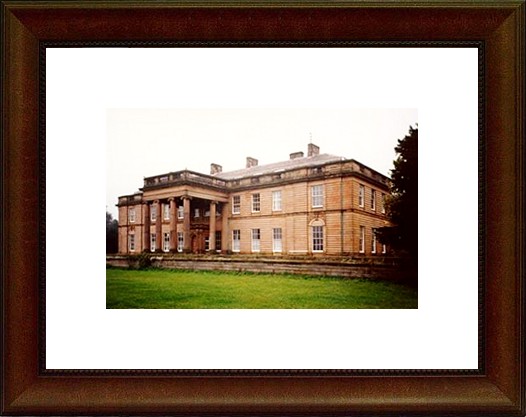
The building now serves as a private apartment block set within 72 hectares of the Burn Hall estate.

So teacher did know best.

'Burn Hall School' was named by its founding fathers after their own religious school housed in an ancient hall on the banks of a 'burn' called Wear in Croxdale, England.

No burnt-down halls anywhere in this tale.

Healthcare Innovations in Kashmir – II

Published / by Jehangir

Last week I wrote about innovations and reforms introduced by the K-RICH team of the Directorate of Health Services, Kashmir. This column will detail some forthcoming projects which are pending approval and two proposals that have the potential to revolutionise healthcare delivery in Kashmir.

Forthcoming Projects

A major innovation by the K-RICH team was the development of a comprehensive plan for Emergency Medical Services (EMS) incorporating a world-class 108 Emergency Ambulance Service and 104 Health Helpline Service under PPP mode. Dr Niyaz Jan was instrumental as his dissertation work was related to EMS services in J&K. The entire process including development of EoI, RFP and tendering process was facilitated by K-RICH.

M/S GVK-EMRI, who are acknowledged leaders in EMS in India were selected as the private partner for the JKATS EMS project. The service is expected to roll out soon across the state of J&K.

The concept of River Ambulances to avoid traffic bottlenecks while transporting patients was also developed by my team as well as a joint-venture with J&K Tourism Department to provide healthcare services in the inaccessible areas of Dal Lake.

Another area high-focus area for the government is development of Public Private Partnerships in healthcare. The K-RICH team identified key areas and developed comprehensive Public Private Partnership (PPP) proposals for setting up Advanced Cardiac Care Centres, Advanced Dialysis and Nephrology Centres, and Cancer Palliative Centres in Kashmir.

K-RICH also developed a model for a pilot project for field testing of innovative equipment like Swasthya Slate developed by Dr Kanav Kahol, Head of the 'Affordable Technology' Division of the Public Health Foundation of India (PHFI) for Indian conditions in the rural districts of Kashmir as a joint venture between the Directorate & PHFI.

A modern Drug Warehouse for scientific storage, management and distribution of medicines to be constructed at Bemina was conceptualized and designed and an outline for a State Drug Corporation was proposed as one component of a comprehensive e-procurement and drug and material management initiative of the Department of Health & Family Welfare.

The K-RICH team also finalized a new Health Secretariat building to house the Directorate of Health Services and other directorates like Family Welfare, SM, and NRHM etc. The concept includes a corporate-based design with all modern public and business amenities including a 500-seat Auditorium.

Planning for the Future

Far reaching as these reforms and innovations may be, more needs to be done. I have proposed two concepts whose potential deserves to be explored.

Zone Management

The first concept which I feel we must adopt is the Zone Management concept. Based on the unique geography of the Kashmir Valley, which is 135 km long but only 32 km wide, it should be divided into three zones for optimal delivery of healthcare and disaster management services:

A. Central Zone – Srinagar, Ganderbal, Bandipora, Budgam and Pulwama Districts with JLNM Hospital Srinagar being designated as the Central Zone Referral Hospital.

B. North Zone – Baramulla and Kupwara Districts with District Hospital Baramulla (DHB) being designated as the North Zone Referral Hospital.

C. South Zone – Anantnag, Kulgam and Shopian Districts with District Hospital Anantnag DHA) being designated as the South Zone Referral Hospital.

Ideally the Zonal Referral Hospital should be part of a Zonal Medical College, but initially the hospital could simply be upgraded with tertiary level staff and facilities. This will ensure that every patient in Kashmir can reach a fully-equipped well-staffed Zonal Referral Hospital within one hour – the ‘golden hour’ in emergency care. If required, the patient can avail a post-stabilisation inter-facility ambulance transport service to a tertiary care hospital. This service has been planned by my team as the ALS component of the JKATS EMS project.

DNB Courses

The second concept that I proposed was the setting up of DNB courses in our district hospitals. Diplomate of National Board (DNB) degree is equivalent to M.D Degree.This will ensure that sufficiently motivated doctors are available in the hospitals round-the-clock. This proposal was enthusiastically followed up by Dr Omar Salim Akhtar, who came up with a comprehensive document which has been submitted to the Union Government for approval and funding.

If approved and repeated in other states, this one concept can have a revolutionary effect on healthcare delivery at the international level as India supplies health manpower to many other countries. Just imagine the enormity of the impact if postgraduation facilities become available in all 22 districts of J&K State compared to only the 2 capital districts.

Till DNB training facilities or Zonal Medical Colleges are set-up the problem of trained manpower can be addressed by inter-zonal pooling of specialists.

The ultimate aim is to deal with the patient load at the zonal level itself so that the pressure on central hospitals is relieved to the point that they can truly start functioning as tertiary level research institutes.

In Conclusion

The K-RICH team worked with many people who did not belong to Kashmir yet made extraordinary efforts to help alleviate the suffering of our patients. Mr Ulrich Balke, InterPLAST co-ordinator, all former and current staff members of ICRC in Kashmir, and Dr Kanav Kahol of PHFI were eager to collaborate on healthcare projects in Kashmir. Dr Eric Bernes, master trainer of the ICRC deserves special mention for his efforts in imparting BLS trainings in less developed regions of the world especially Kashmir.

The efforts of K-RICH were a part of the overall focus of the Directorate of Health Services to improve healthcare delivery as well as accountability.

In the first year itself (2011-1012), the performance statistics were astonishing with significant increase in all performance parameters – OPD performance increased by 30.5%, IPD by 33.5 %, Investigations by 48.5 % and Major Surgeries by 38.5% over the previous year. Similar improvements were noted in the following year. Advanced surgeries are now routinely being conducted at district level. The scale of these improvements culminated in the State of J&K being awarded as the best performing state in Primary Healthcare in India with the award being personally received by the Hon’ble Chief Minister.

Ideas and suggestions for improving the healthcare delivery system in J&K are welcome.

Postscript: After this article was submitted, news came of the approval granted by Union Ministry of Health for medical colleges to be started in Anantnag and Baramulla Districts. This will give a huge boost to the concept of the Zone-based healthcare delivery system when and if it is put into practice.

(Concluded)

Link: Newspaper version in Greater Kashmir

Healthcare Innovations in Kashmir – I

Published / by Jehangir

In 2011, I rejoined the Directorate of Health Services Kashmir (DHSK) after two decades in Government Medical College Srinagar including a stint as an International Visiting Fellow at Harvard Medical University (MGH, Boston). I was given the dual responsibility of reviving the defunct Kashmir Nursing Home as Medical Superintendent, and the open-ended task of conceptualizing and implementing healthcare reforms and innovations as Member-Secretary of the newly formed K-RICH committee (Kashmir Reforms & Innovations Committee for Healthcare).

SDH Pahalgam Concept

Fortunately, my team members were two energetic and dedicated young doctors who had recently been trained in Public Health at the National Institute of Health and Family Welfare, New Delhi. The personalities of Dr Niyaz Jan and Dr Arshad Rafi could not be more different, but between the three of us we came up with a series of health reforms and innovations that have transformed the face of health care delivery in Kashmir.

Our initial focus was on logical manpower placement. I was astonished to learn that super-specialists were languishing in the field without the necessary resources to utilise their skills– for example, an onco-surgery specialist was posted in a remote area of Kupwara without access to an operating theatre. Immediately we conceived the idea of conducting SuperSpecialist Outreach Clinics (SSOC) at Kashmir Nursing Home where super-specialist doctors from the field could utilize their training and skills in a favourable environment. OPDs were started in Cardiology, Gastroenterology, Endocrinology, Urology, Plastic Surgery, Orthopaedics, Pediatrics & Pediatric Surgery, Haematology and other super-specialties.

By the time Kashmir Nursing Home was taken over by Government Medical College Srinagar in 2013, upto 200 patients per day were being provided super-specialist consultation and the total patients treated ran into tens of thousands. Thousands of Day Care Surgery procedures had been conducted along with hundreds of endoscopies. Numerous free testing camps including BMD, Lipid and Diabetes testing camps had been conducted along with Patient Awareness Camps for lifestyle diseases. Regular Basic Life Saving (BLS) training sessions and Blood Donation Camps were held and hundreds of blood units collected.

The K-RICH team introduced BLS (Basic Life Support) training in collaboration with the International Committee of the Red Cross (ICRC). A core team of BLS Trainers was trained by Dr Eric Bernes, world-renowned expert from International Committee of the Red Cross (ICRC). These trainers in turn have provided BLS training to almost 5000 health employees in a phased manner. Photo/Video Journalists and drivers belonging to health services were also trained in BLS as they are often the first on the scene of an emergency and plans were developed to focus on BLS trainings for students and police personnel.

Advanced Human Simulator at RIHFW

A bottleneck in optimal healthcare delivery was found to be the lack of adequately trained paramedics in Kashmir. K-RICH developed and implemented a state-of-the-art Patient Simulation Laboratory at RIHFW Dhobiwan with the advice of Dr Kanav Kahol from the Public Health Foundation of India (PHFI). This in-house innovation of the first Patient Simulation Lab in the public health sector in India is enabling students, paramedics and doctors to learn, practice, and repeat procedures as often as necessary in order to correct mistakes and refine their skills without compromising the safety of real patients. Dr Manzoor Kadri, the proactive Principal of RIHFW, helped us to develop a schedule for weekly training of doctors and paramedics from district institutions under his direct supervision so as to maximize benefits of the SimLab.

Another area where we benefited from the wide experience of Dr Manzoor Kadri was the revival of academic activities including publication of the Indian Journal for the Practising Doctor (IJPD), the indexed peer-reviewed journal of the Directorate of Health Services, besides Kashmir Healthline, a quarterly newsletter and an annual comprehensive performance review book. An eye-catching calendar showcasing the achievements of the Directorate has also been introduced from the past two years.

During a meeting with the Asia Head of the International Committee of the Red Cross (ICRC) to review our progress and to explore further avenues of collaboration, I requested the ICRC to arrange ATLS trainings for our specialists. Since we had set exacting international standards for the JKATS EMS project, I also requested the ICRC to share their experience in ER development so that the same level of care would be maintained once the patient was transferred from the JKATS ambulances to our hospitals.

In 2013, twenty trainers of the Directorate were trained in ERTC (ATLS) by master trainers from the ICRC in April 2013. Meanwhile the Directorate constituted its own ER development team which is setting up modern fully-equipped Emergency Rooms in hospitals in the field. This team is doing a fantastic job and hopefully the ICRC will help with targeted trainings in modern ER concepts.

InterPLAST Reconstructive Surgery Workshop in Kashmir

Another collaborative effort achieved by K-RICH was a joint Reconstructive Surgery Workshop with InterPLAST-Germany. A plastic surgery team from Germany headed by Dr. Andreas Schmidt and assisted by specialists from DHSK conducted free reconstructive surgeries during which 80 patients of cleft deformities, burn injuries and other functional disabilities were operated upon. Two hundred more patients were registered for subsequent camps.

In 2013, I was appointed as Nodal Officer for DHSK for the Amarnath Pilgrimage. Dr Niyaz Jan had left for the USA to pursue Masters in Public Health, but with the assistance of Dr Arshad Rafi , we developed an Active Health Management Manual for pilgrimages and similar events. Health facilities were drastically overhauled and the event was micro-planned to such a level that there was a drastic reduction in Yatra deaths this year.

Another perplexing state-of-affairs was the manner in which new hospitals were being constructed in J&K. Agencies like PWD, JKPCC etc were being handed over enormous amounts of money and land to build hospitals in any manner they pleased. Facilities were being planned in a haphazard manner, and building vertically to reduce the footprint while conserving available land was an alien concept. Major hospitals had been in the pipeline for decades without being commissioned, and those few that had been completed lacked major facilities like patient lifts and ramps.

District Hospital under construction at Kargil

The K-RICH team did an intensive study of international and national hospital standards as well as relevant codes like the National Building Code. Based on these principles we designed a series of prototype DH, CHC and PHC designs wherein latest hospital concepts as well as disaster management and patient accessibility standards were incorporated. Major Hospitals like District Hospitals of Bandipora, Kargil, Sub- District Hospitals at Pahalgam and Tangmarg, Trauma Hospital at Bijbehara, Primary Health Centres at Quimoh, Kalamchakla, Chanapora, and numerous other health institutions are being constructed on prototype designs developed by K-RICH. We also redesigned a number of existing or under-construction hospitals to become more standards-compliant and user-friendly with the addition of ramps, wheelchair access, sub-waiting spaces, additional toilets and attendant facilities.

As Nodal Officer for NABH (National Board for Accreditation of Hospitals) Project efforts were initiated for getting selected hospitals of the health department accredited by NABH. Proposals for Colour-coded aprons and QR-Code based ID Cards were introduced as well as Biometric employee attendance systems with remote surveillance.

With the transfer of Kashmir Nursing Home to the Medical Education department, we shifted the Super-Specialist Outreach Clinics (SSOC) to the underutilized Mini Maternity Centre (MMC) at Zakura to provide the population of the underserved area with advanced healthcare facilities at their doorstep. Specialist Outreach camps are being held at district level in collaboration with NGO’s like Zakat Trust etc.

(To be concluded)

Link: Newspaper version in Greater Kashmir