Halcyon Days

Published / by Jehangir

If one were to take to praise Kashmir, whole books would have to be written. . . . Kashmir is a garden of eternal spring, or an iron fort to a palace of kings – a delightful flower-bed, and a heart-expanding hermitage for dervishes.
The Jehangirnama

The following passage is an excerpt from:
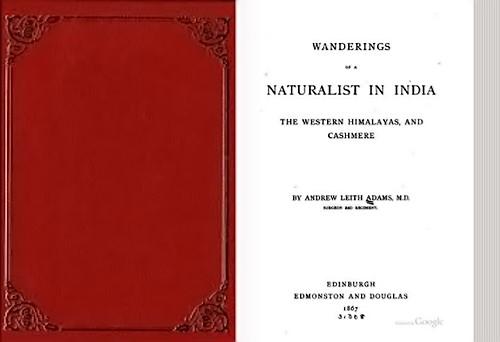
We could scarcely have chosen a better morning for our excursion. The sun was gilding the snow-covered peaks of the northern Pinjal as we commenced the ascent, and by the time we had gained the temple, his rays, in one flood of golden lights had illuminated half the valley, leaving the southern portion and the slopes of the Peer Pinjal yet intact.

Seldom does he shine on more varied and beautiful scenery, for in all my wanderings before and since I have never witnessed its equal. There lay the capital at our feet, half-hidden among clusters of poplars, chunars, and forest trees – the Dul lake, washing the western base of the Tukt-i-Salaman, stretched westward with all its ever-changing forms.

On the placid waters of the lake numerous skiffs shot either rapidly along, or threaded their way through a labyrinth of weeds, diversified by the countless floating gardens, and the Isle of Chunars, with its noble plane-trees. The Shalimar and pleasure-grounds of the Delhi emperors, now faded, and fast passing into the wild jungle around them, covered portions of the northern bank of the lake.

Huri Purbet, like a fortress which had undergone a siege, its walls crumbling into decay, stood on the side of a spur overlooking a scene which for loveliness and grandeur has scarcely an equal. So perfect seemed both the natural and artificial portions of the panorama so faintly blending with each other, and yet so grand, that the eye in one sweep passed over most perfect pictures of lake and mountain scenery.
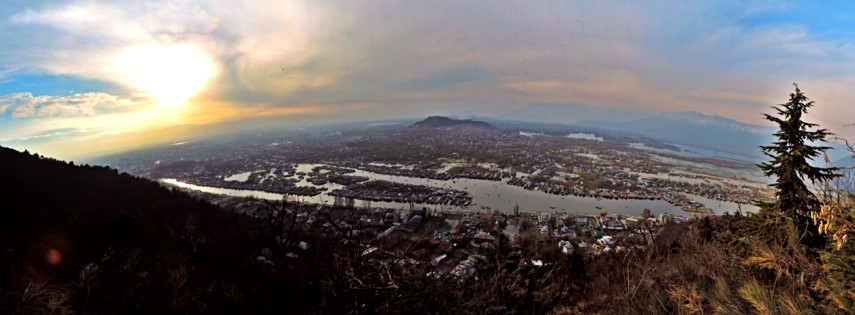
Towards the city stretched a noble avenue of poplars, upwards of a mile in length, and straight as arrows ; whilst away towards the east rich pastures and fields teemed with grain ; villages nestled in clusters of trees, which in rows were seen fringing the banks of the classical Hydaspes, that like a huge snake twisted through the plain.

Then, last of the many beauties, rose those grand and noble mountains, encircling the whole panorama, and shielding the paradise from the northern blasts, whilst from their rugged sides dashed a thousand rills to fertilise and beautify its soil.

My Favourite Books of 2017

Published / by Jehangir

Sapiens by Yuval Noah Harari

We of the east cannot fathom why westerners have forsaken religion. Read this book.

A History of the World in 1000 Objects [DK/Smithsonian]

The intro starts off with this line – ‘There is something magical about the survival of human-made objects from the past.’ History leaping out from the pages is the real magic of this book.

Prisoners of Geography by Tim Marshall

Why nations act the way they do – its in their genes geography.

Two real disappointments this year were Exit West – with one of my favourite authors Mohsin Hamid [Moth Smoke/The Reluctant Fundamentalist] not quite able to pull off magical realism – and Artemis by Andy Weir [The Martian].

Note: These are my favourites among all the books I have read in 2017, not published in that year 😉

Operas of the East

Published / by Jehangir

In our childhood days an old family retainer would regale us with his rambling retelling of the adventures of two heroes – Prince Gulfaam and the unnamed hero of Gul-e-Bakawali ( whose name he probably could not recall 😉 )

I. Gul-e-Bakawali

In 1712, Sheikh Izzat Ullah wrote a medieval romance Taj-ul-Mulk Gul-e-Bakawali narrating the tale of Prince Taj-ul-Mulk, Princess Bakawali and a magical flower that could restore sight to the blind. His book was written in Farsi (Persian) prose and over the years a number of authors published their own poetry/prose versions, and plays and later films in various Indian languages were based on the fable.

In 1835, Pandit Daya Shankar Naseem, belonging to a Kashmiri family settled in Lucknow wrote ‘Gulzar-e-Naseem‘ a masnavi (poem with rhyming couplets) based on ‘Gul-e-Bakawali‘. Reputedly verses from the poem became very popular and excerpts from the poem were included in text books.

dekha to woh gul hawa hua hai
kuchh aur hi gul khila hua hai

jis kaf men woh gul ho daagh ho jaaye
jis ghar men ho gul chiraagh ho jaaye

When the poem ran into controversy over its antecedents, Pandit Daya Shankar Naseem was defended spiritedly by Brij Narain Chakbast. Apparently the controversy was fanned at the time by Awadh Punch, an Urdu weekly. Who knew that Punch (1841-1992), the famous satirical British journal, had an Indian clone in the shape of the Awadh Punch (1877-1936), that dared to make fun of British rule during the heydays of the Raj in India!

Pandit Brij Narain Chakbast (1882–1926) himself belonged to a Kashmiri family settled in the erstwhile United Provinces. He wrote some highly-regarded poetry, most famously the following couplet:

zarra zarra hai mere kashmir ka mehmaan nawaaz
raah mein patthar ke tukdon ne diya paani mujhe

[I was reminded of this couplet when our thirsty trekking party encountered cool sweet water flowing out of the rocks on the way to Gangabal from Naranag]

II. Indar Sabha

The story of Prince Gulfaam is even more interesting.

Nawab Wajid Ali Shah, the last Nawab of Oudh (Awadh), was so enamoured by accounts of famous European operas that he commissioned Syed Agha Hassan Amanat to compose an opera in Urdu. The Nawab supervised the production, composed part of the music and performed one of the leading roles in the opera whenever it was performed before courtiers at Kaisar Bagh in Lucknow!

The opera called The Court of Indra or Indar Sabha is a fantasy about the forbidden attraction between Prince Gulfaam (the Flower Prince), son of Gulzar Shah (the King of the Flower-Garden) in Hindustan and the Sabz Pari (the Emerald Fairy) of the heavenly court of Raja Indra, ruler of Paristan (the Land of Fairies) in Koh-e-Qaf (the Caucasus Mountains) beyond Iran.

Gulfaam is a recurring motif in Kashmiri literature, and a mystical couplet describes an idyllic setting thus:

Springtime, fragrant goblets
the evening of the full moon
rhythms of songs of youth
and Gulfaam in front of my eyes

III. Bombur ta Yemberzal

The first opera in Kashmiri was Bombur ta Yemberzal (The Bumblebee and the Narcissus) written by Pandit Dina Nath Nadeem. It is a tale about the doomed love between the Narcissus (Yembarzal) which blooms in springtime and withers away, and the Bumblebee (Bombur) which arrives in summer and searches from flower to flower till it goes blind.

Mohan Lal Aima composed the music for the opera including the famous Bumbro Bumbro song. ‘Bombur ta Yemberzal’ was performed at Tagore Hall in 1955 for Russian dignitaries Nikita Khruschev and Nikolai Bulganin.


Image credit: RIA Novosti

Bombur-Yemberzal as a symbol of selfless love is quite common in popular culture. Mahjoor’s lyrics provide the theme of a Kashmiri-Urdu-Persian fusion song which is a huge hit with Kashmiri youth.

tamanna chaani deedaruk chumo yemberzale bumbro
phaejis yamath laejis wuchney gaejis chaney kaley bumbro

karan mahjoor chu husnas gath vanan yaaras patho akh kath
ye dil deewan gow sei path beyis seith na raley bumbro

Coming back to the old retainer, I don’t know where that illiterate rascal had heard these fantastic tales but his dastangoi – mixing up elements from each other and from other unrelated tales – used to be hilarious yet curiously compelling.

Ah sweet nostalgia!