
Balraj Sahni was one of my favourite actors of Hindi cinema. I feel all his roles had a kind of compelling sincerity.
Many people may not know that he was a noted progressive thinker and award-winning author with a strong connection to Kashmir.
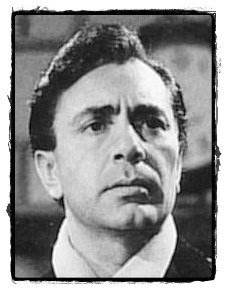
An excerpt from his biography:
'Balraj's association with Kashmir, starting from the early thirties, was to become deep and intimate. Kashmir became for him a kind of second home. He revelled deeply in its idyllic surroundings, long hikes, long swims in the lakes, and mountain-climbing. Kashmir was to become for him a place of deep personal attachments. It was here that he wrote some of his charming little poems and stories. It was also to become a field for his cultural and literary activities in the years to come.'
In the same book, Bhisham Sahni also relates how his brother stunned an audience unsympathetic to the Kashmiri freedom struggle against the Dogra rule by making the following observation:
'Why, all the purse-strings in the state are either in the hands of the Maharaja or the Punjabi traders who do not belong here and who exploit the local inhabitants.'
An incident in Kashmir made a lasting impact on Balraj Sahni. He describes it in this excerpt from his convocation address at Jawaharlal Nehru University in 1972.
'I'd like to tell you about an incident which took place in my college days and which I have never been able to forget. It has left a permanent impression on my mind.
I was going by bus from Rawalpindi to Kashmir with my family to enjoy the summer vacation. Half-way through we were halted because a big chunk of the road had been swept away by a landslide caused by rain the previous night. We joined the long queues of buses and cars on either side of the landside.
Impatiently we waited for the road to clear. It was a difficulty job for the P.W.D. and it took some days before they could cut a passage through. During all this time the passengers and the drivers of vehicles made a difficult situation even more difficult by their impatience and constant demonstration. Even the villagers nearby got fed up with the high-handed behaviour of the city-walas.
One morning the overseer declared the road open. The green- flag was waved to the drivers. But we saw a strange sight. No driver was willing to be the first to cross. They just. stood and stared at each other from either side. No doubt the road was a make-shift one and even dangerous. A mountain on one side, and a deep gorge and the river below. Both were forbidding. The overseer had made a careful inspection and had opened the road with a full sense of responsibility. But nobody was prepared to trust his judgment, although these very people had, till yesterday, I accused him and his department of laziness and incompetence.
Half an hour passed by in dumb silence. Nobody moved. Suddenly we saw a small green sports car approaching. An Englishman was driving it; sitting all by himself. He was a bit surprised to see so many parked vehicles and the crowd there. I was rather conspicuous, wearing my smart jacket and trousers. "What's happened?" he asked me.
I told him the whole story. He laughed loudly, blew the horn and went straight ahead, crossing the dangerous portion without the least hesitation.
And now the pendulum swung the other way. Every body was so eager to cross that they got into each other's way and created a new-confusion for some time. The noise of hundreds of engines and hundreds of horns was unbearable.
That day I saw with my own eyes the difference in attitudes between a man brought up in a free country and a man brought up in an enslaved one. A free man has the power to think, decide, and act for himself. But the slave loses that power. He always borrows his thinking from others, wavers in his decisions, and more often than not only takes the trodden path.
I learnt a lesson from this incident, which has been valuable to me. I made it a test for my own life. In the course of my life, whenever I have been able to make my own crucial decisions, I have been happy. I have felt the breath of freedom on my face. I have called myself a free man. My spirit has soared high and I have enjoyed life because I have felt there is meaning to life.'
So there it is. A life lesson from Balraj Sahni.

Biography : Balraj, my brother (National biography series), by Bhishma Sahni. National Book Trust, India, 1981.
Autobiography: Link
1972 JNU Convocation Address : Link

