The Day a Nation was Sold

Published / by Jehangir

On this day in 1846, the British sold Kashmir for 75 lakh nanakshahi rupees to Gulab Singh via the Treaty of Amritsar.

After the death of Maharaja Ranjit Singh in 1839 the Punjab fell into a state of disorder. The British were quick to take advantage of the anarchy and decisively defeated the Khalsa at Aliwal (January 1846) and Sobraon (February 1846), hastening the demise of the once-mighty Sikh Empire.

Pre-informed by Pandit Dina Nath, the Finance Minister of Lahore that his coffers were worth only half a crore, the British imposed a war indemnity of one-and-a-half crores on the Sikhs for the crime of 'unprovoked aggression' against the East India Company.

By the Treaty of Lahore the British claimed all the territories between the Beas and the Indus in lieu of the remaining one crore rupees.

The Sikh Empire was also forced to recognize Raja Gulab Singh of Jammu, their erstwhile vassal, as an 'independent sovereign' to allow the British to 'admit him to the privileges of a separate treaty'.

This Gulab Singh was a one-time sowar or cavalryman of the Dogra army who found favour with Maharaja Ranjit Singh and was elevated as a prince of Jammu.

In lieu of 'services' rendered to the British during the Anglo-Sikh wars and the negotiations that followed, they elevated Gulab Singh to the status of 'Maharaja' at Amritsar on March 15, 1846. With folded hands Gulab Singh declared himself to be a 'zar kharid ghulam' of the Raj. On the next day, March 16, 1846 the Treaty of Amritsar was signed. By Article 1 of the treaty, Gulab Singh acquired 'all the hilly or mountainous country with its dependencies situated to the eastward of the River Indus and the westward of the River Ravi'.

To add insult to inhumanity, Gulab Singh acknowledged the supremacy of the British Government – amply demonstrated by the power to sell into bondage every man woman and child in Kashmir – by agreeing to present annually to the British Government:

'one horse, twelve shawl goats of approved breed (six male and six female) and three pairs of Cashmere shawls'.

Since the land had already been paid for, one may assume that all the children of Kashmir equaled one horse in value, men and women six shawl goats each while the three shawls must obviously have symbolised the much vaunted British values of honor, justice, and fair play.

The Kenyan-born poet, Shailja Patel wonders- 'How do you price a country? How do you value its mountains and lakes, the scent of its trees, the colors of its sunrise? What’s the markup on the shapes of fruit in the dreams of its people?'

It is the British that are thus responsible for the unending cycle of slavery, violence and death that followed the Treaty of Amritsar and continues to this day.

Surely we had our own internal issues, but the British had no right to outsource mayhem to the Dogras. We have no end of local talent in that department. For centuries it has been this self-destructive trait that has arrested our progress into an evolved society.

An example of the titles bestowed by a grateful Raj upon the Dogra rulers:
Lieutenant-General His Highness Shriman Rajrajeshwar Maharajadhiraj Sri Sir Hari Singh Indar Mahindar Bahadur, Sipar-i-Sultanat, Maharaja of Jammu and Kashmir, GCSI, GCIE, GCVO

In February this year, another worthy with a mouthful of titles, the Right Honourable David Cameron, Member of Parliament, Prime Minister of the United Kingdom and First Lord of the Treasury performed an ablutionary pilgrimage to Jalianwala Bagh. In the visitor's book he wrote:

"This was a deeply shameful event in British history and one that Winston Churchill rightly declared at the time as 'monstrous'."

"We must never forget what happened here. And in remembering we must ensure that the United Kingdom stands up for the right of peaceful protest around the world."

Will David Cameron visit Kashmir and apologise to the Kashmiri nation for the shameful Treaty of Amritsar?

Did I mention that Mr Cameron visited India as part of a trade delegation? Sin relación, probably. As another completely unrelated fact, 5 lakh British Sikhs are potential voters for the Conservative Party.

I wonder how many Kashmiri's possess voting rights in the United Kingdom?

P.S Here is a reproduction of the Treaty of Amritsar

Thesiger in Kashmir

Published / by Jehangir

Sir Wilfred Thesiger (1910–2003) was a British explorer and travel writer best known for two travel books recounting his adventures in Arabian deserts and the marshes of Iraq.

Arabian Sands (1959) chronicled the vanishing way of life of the Bedouins, while The Marsh Arabs (1964) described the people of the marshes of southern Iraq.

Many people regard him as the last of the great traveller/explorers who wandered wildernesses across the globe. However, unlike his colonial predecessors, Thesiger's USP was his absolute empathy with the communities he encountered in his travels.


At the end of 'A Short Walk in the Hindu Kush', Eric Newby, no mean traveller himself, relates how during a chance meeting in the of the mountain ranges of Asia, Thesiger reacted to Newby and his friend attempting to inlate their air beds by exclaiming "God, you must be a couple of pansies."

Thesiger had also explored the Hindu Kush, the Karakorams and the Pamirs and described his travels amongst tribes like the Kafir Kalash, but I was unaware that he had visited and photographed Kashmir in 1983.

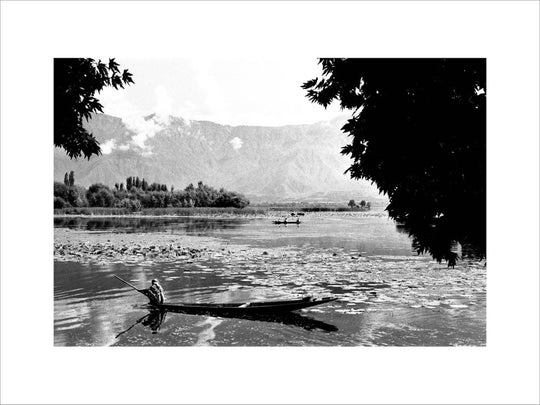
Exhibit: This single tantalising photograph entitled 'Dal Lake at Srinagar'

Thesiger took tens of thousands of photographs during eight decades of travel throughout Africa and Asia. However not many details are available of his Kashmir visit. Which begs the question – would Thesiger visit Kashmir and restrict himself to just one photo?

Thesiger's photographs were famed for their clarity and expressiveness and I hope we can access more of his Kashmir portfolio sometime.

UPDATE: Thesiger’s Ladakh portfolio with, sadly, just the solitary Dal photograph.

A Personal Pilgrimage

Published / by Jehangir

Recently I helped the ZAKAT Trust organise a free medical camp at Khrew. The camp was a great success and around a thousand people including families from remote areas were able to take advantage of the facilities provided at the camp. For the first time in Kashmir, super-specialist consultations, sophisticated investigations and free medicines were available in a mobile medical camp.

On a personal level the trip to Khrew turned out to be serendipitous. Our gracious host Yawar Masoodi guided me to a cave on a hillock at Ladhoo where Sheikh Nur-ud-Din Wali meditated for more than a dozen years. The fifteenth-century mystic popularly called Sheikh-ul-Alam or Alamdar-e-Kashmir (the Standard Bearer of Kashmir) is the patron saint of Kashmir.


There is one God
but with a hundred thousand names
every single blade of grass
worships Him


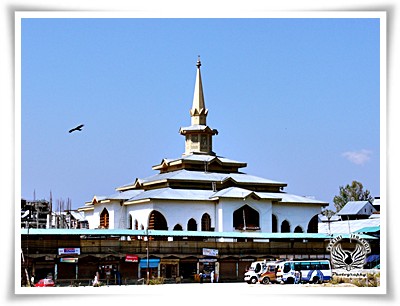
Sheikh-ul-Alam's shrine at Chrar-e-Sharif


A rocky path leads down from the cave to a small hut where another famous mystic called Lassa Sahib used to meet his devotees.

My family had connections with both these spiritual guides and so the trip became a personal pilgrimage of sorts.

Our next stop was Wahab Sahib's shrine at a picturesque spot among the forested foothills of the Wastarwan Hill, a couple of kilometres from Shar Shali vilage.

Wahab Khar (1842-1910) was an illiterate blacksmith who also happened to be an accomplished mystical poet. 'Mehrajnama' and 'Maach Tulir' are his famous works.

'Athi chhu Wahab Khar ti lajawab' is an adage that testifies to his status.


Kam kam Suleiman aaye matyo
kati Haatim Tai
dorah karith draiy matyo
jai kathyo chi

In the hills above Mandakpal village near Ladhoo is a shrine with a clear water spring dedicated to another famed poet-mystic, Niyami Sahib.

Just below the hillock at Ladhoo are impressive ruins of a temple tank complex labeled as Sandyasar Nag and Sun Temple on Wikimapia.

Ram Chandra Kak, in Ancient Monuments of Kashmir, considers the temple to be the first of its kind and the forerunner of the elaborate Avantiswami and Martand Temples. Nag-gaad (fish) abound in the temple tank and I saw an unusual white fish with a black head swimming among bathers in the tank.


The Jwalamukhi temple at the top of the small hillock near Wuyan is dedicated to the Goddess of Fire. Mela Jwalamukhi is celebrated on the 14th day of Shravan (July–August) at the temple. According to residents, Mela Jwalamukhi is the second most important mela for pilgrims after Mela Khir Bhavani.

A sacred spring called Damodar Nag at Khonmoh and ancient rock carvings at Bunshwar are other places of archaeological interest in the area.

Shikargah, the erstwhile hunting preserve of the Maharajas of Kashmir and the Greater Dachigam area as well as the Wastarvan forests can be developed as prime camping/trekking/hiking destinations to complement the immense potential for pilgrimage tourism in the area. Two issues will need to be taken care of beforehand.

The first is the seemingly random stone quarrying that is leaving huge scar marks on the pristine hills.

The second issue is the increasing pollution from the cement factories in the Wuyan/Khonmoh belt which has the makings of a major environmental disaster.

On some days the whole area is shrouded in a grey haze, and there are reports of increasing pollution-related health problems. To complicate things further, the area is also home to the critically endangered Hangul, the official State Animal of J&K and the only Red Deer species in Asia.


Jwalamukhi Temple is barely visible through the haze generated by cement factories.

Incidentally this shared concern for the dwindling Hangul habitat laid the foundations of my friendship with Yawar. There are signs that he may assume a more public role in the coming years. That is indeed a ray of hope in the gloom (quite literally, as is evident from the photograph of the Jwalamukhi Temple).

Stay blessed, my friend.