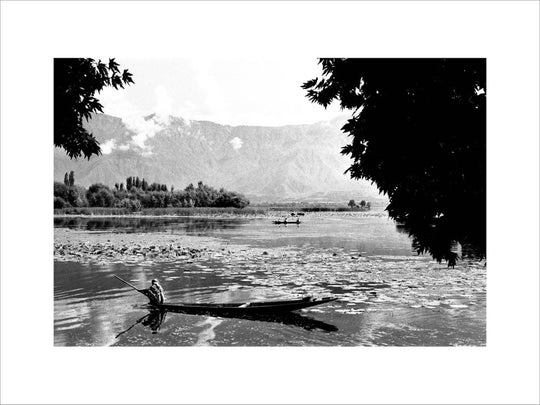
On this day in 1846, the British sold Kashmir for 75 lakh nanakshahi rupees to Gulab Singh via the Treaty of Amritsar.
After the death of Maharaja Ranjit Singh in 1839 the Punjab fell into a state of disorder. The British were quick to take advantage of the anarchy and decisively defeated the Khalsa at Aliwal (January 1846) and Sobraon (February 1846), hastening the demise of the once-mighty Sikh Empire.

Pre-informed by Pandit Dina Nath, the Finance Minister of Lahore that his coffers were worth only half a crore, the British imposed a war indemnity of one-and-a-half crores on the Sikhs for the crime of 'unprovoked aggression' against the East India Company.
By the Treaty of Lahore the British claimed all the territories between the Beas and the Indus in lieu of the remaining one crore rupees.
The Sikh Empire was also forced to recognize Raja Gulab Singh of Jammu, their erstwhile vassal, as an 'independent sovereign' to allow the British to 'admit him to the privileges of a separate treaty'.
This Gulab Singh was a one-time sowar or cavalryman of the Dogra army who found favour with Maharaja Ranjit Singh and was elevated as a prince of Jammu.

In lieu of 'services' rendered to the British during the Anglo-Sikh wars and the negotiations that followed, they elevated Gulab Singh to the status of 'Maharaja' at Amritsar on March 15, 1846. With folded hands Gulab Singh declared himself to be a 'zar kharid ghulam' of the Raj. On the next day, March 16, 1846 the Treaty of Amritsar was signed. By Article 1 of the treaty, Gulab Singh acquired 'all the hilly or mountainous country with its dependencies situated to the eastward of the River Indus and the westward of the River Ravi'.
To add insult to inhumanity, Gulab Singh acknowledged the supremacy of the British Government – amply demonstrated by the power to sell into bondage every man woman and child in Kashmir – by agreeing to present annually to the British Government:
'one horse, twelve shawl goats of approved breed (six male and six female) and three pairs of Cashmere shawls'.
Since the land had already been paid for, one may assume that all the children of Kashmir equaled one horse in value, men and women six shawl goats each while the three shawls must obviously have symbolised the much vaunted British values of honor, justice, and fair play.

The Kenyan-born poet, Shailja Patel wonders- 'How do you price a country? How do you value its mountains and lakes, the scent of its trees, the colors of its sunrise? What’s the markup on the shapes of fruit in the dreams of its people?'
It is the British that are thus responsible for the unending cycle of slavery, violence and death that followed the Treaty of Amritsar and continues to this day.
Surely we had our own internal issues, but the British had no right to outsource mayhem to the Dogras. We have no end of local talent in that department. For centuries it has been this self-destructive trait that has arrested our progress into an evolved society.
An example of the titles bestowed by a grateful Raj upon the Dogra rulers:
Lieutenant-General His Highness Shriman Rajrajeshwar Maharajadhiraj Sri Sir Hari Singh Indar Mahindar Bahadur, Sipar-i-Sultanat, Maharaja of Jammu and Kashmir, GCSI, GCIE, GCVO
In February this year, another worthy with a mouthful of titles, the Right Honourable David Cameron, Member of Parliament, Prime Minister of the United Kingdom and First Lord of the Treasury performed an ablutionary pilgrimage to Jalianwala Bagh. In the visitor's book he wrote:
"This was a deeply shameful event in British history and one that Winston Churchill rightly declared at the time as 'monstrous'."
"We must never forget what happened here. And in remembering we must ensure that the United Kingdom stands up for the right of peaceful protest around the world."
Will the Prime Minister of the United Kingdom ever visit Kashmir and apologise to the Kashmiri people for the shameful Treaty of Amritsar?
Did I mention that Mr Cameron visited India as part of a trade delegation?
Sin relación, probably.
As another completely unrelated fact, 5 lakh British Sikhs are potential voters for the Conservative Party. I wonder how many Kashmiri's possess voting rights in the United Kingdom?

P.S Here is a reproduction of the Treaty of Amritsar