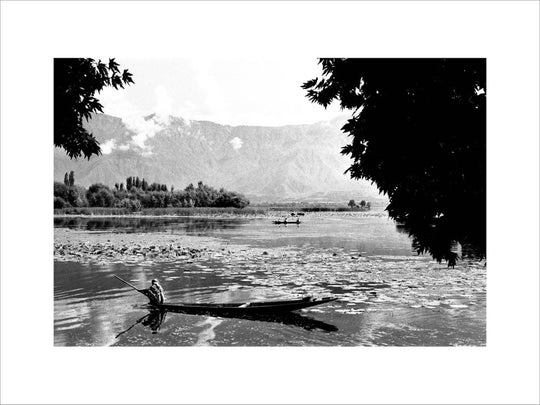
Recently I helped the ZAKAT Trust organise a free medical camp at Khrew. The camp was a great success and around a thousand people including families from remote areas were able to take advantage of the facilities provided at the camp. For the first time in Kashmir, super-specialist consultations, sophisticated investigations and free medicines were available in a mobile medical camp.
On a personal level the trip to Khrew turned out to be serendipitous. Our gracious host Yawar Masoodi guided me to a cave on a hillock at Ladhoo where Sheikh Nur-ud-Din Wali meditated for more than a dozen years. The fifteenth-century mystic popularly called Sheikh-ul-Alam or Alamdar-e-Kashmir (the Standard Bearer of Kashmir) is the patron saint of Kashmir.
There is one God
but with a hundred thousand names
every single blade of grass
worships Him
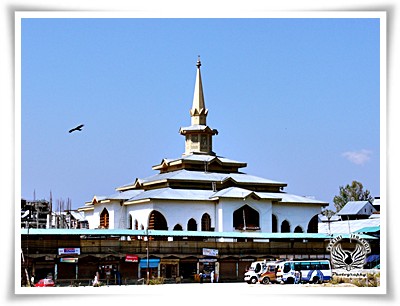
Sheikh-ul-Alam's shrine at Chrar-e-Sharif
A rocky path leads down from the cave to a small hut where another famous mystic called
Lassa Sahib used to meet his devotees.

My family had connections with both these spiritual guides and so the trip became a personal pilgrimage of sorts.
Our next stop was Wahab Sahib's shrine at a picturesque spot among the forested foothills of the Wastarwan Hill, a couple of kilometres from Shar Shali vilage.
Wahab Khar (1842-1910) was an illiterate blacksmith who also happened to be an accomplished mystical poet. 'Mehrajnama' and 'Maach Tulir' are his famous works.
'Athi chhu Wahab Khar ti lajawab' is an adage that testifies to his status.
Kam kam Suleiman aaye matyo
kati Haatim Tai
dorah karith draiy matyo
jai kathyo chi
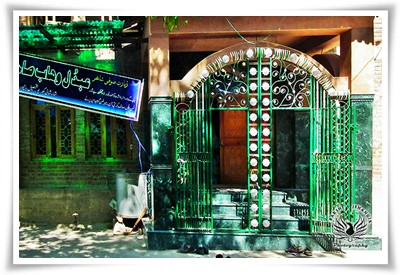
In the hills above Mandakpal village near Ladhoo is a shrine with a clear water spring dedicated to another famed poet-mystic, Niyami Sahib.
Just below the hillock at Ladhoo are impressive ruins of a temple tank complex labeled as Sandyasar Nag and Sun Temple on Wikimapia.
Ram Chandra Kak, in Ancient Monuments of Kashmir, considers the temple to be the first of its kind and the forerunner of the elaborate Avantiswami and Martand Temples. Nag-gaad (fish) abound in the temple tank and I saw an unusual white fish with a black head swimming among bathers in the tank.

The
Jwalamukhi temple at the top of the small hillock near
Wuyan is dedicated to the Goddess of Fire.
Mela Jwalamukhi is celebrated on the 14th day of Shravan (July–August) at the temple. According to residents, Mela Jwalamukhi is the second most important mela for pilgrims after
Mela Khir Bhavani.
A sacred spring called Damodar Nag at Khonmoh and ancient rock carvings at Bunshwar are other places of archaeological interest in the area.
Shikargah, the erstwhile hunting preserve of the Maharajas of Kashmir and the Greater Dachigam area as well as the Wastarvan forests can be developed as prime camping/trekking/hiking destinations to complement the immense potential for pilgrimage tourism in the area. Two issues will need to be taken care of beforehand.
The first is the seemingly random stone quarrying that is leaving huge scar marks on the pristine hills.

The second issue is the increasing pollution from the cement factories in the Wuyan/Khonmoh belt which has the makings of a major environmental disaster.
On some days the whole area is shrouded in a grey haze, and there are reports of increasing pollution-related health problems. To complicate things further, the area is also home to the critically endangered Hangul, the official State Animal of J&K and the only Red Deer species in Asia.

Jwalamukhi Temple is barely visible through the haze generated by cement factories.
Incidentally this shared concern for the dwindling Hangul habitat laid the foundations of my friendship with Yawar. There are signs that he may assume a more public role in the coming years. That is indeed a ray of hope in the gloom (quite literally, as is evident from the photograph of the Jwalamukhi Temple).
Stay blessed, my friend.