Category Archives: Kashmir

A Bridge named Albion?

Published / by Jehangir

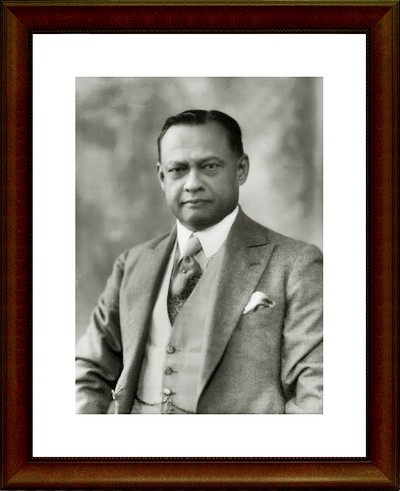
On this day in 1929 newspapers carried an article exposing the sectarian and autocratic character of the Dogra rule. The publication of this article emboldened Kashmiri muslims to raise the banner of protest. Remarkably, the article was written by the serving Prime Minister of KashmirSir Albion Banerji.

Sir Albion R. Banerji, Kt., C.S.I. C.I.E., (1871 – 1950) was the first Bengali Brahman to be born in England, hence his unusual first name. He earned his Master's Degree at the Balliol College, Oxford and joined the Indian Civil Service in 1894. At the Delhi Durbar of 1911, Albion Banerji was awarded the Companion of the Indian Empire (CIE).

He served as Magistrate in the Madras Presidency, and as Diwan of Cochin and then of Mysore before joining the Maharaja's administration in Kashmir as the Foreign and Political Minister.

In 1927 Sir Albion Banerji was appointed Prime Minister of Kashmir.

On March 16, 1929, he published a scathing indictment of the administration of the Kashmir State – criticising the Maharaja's lavish lifestyle sustained by a poor population – and then resigned from his post.

Some excerpts from the note:

'Jammu and Kashmir state is labouring under many disadvantages, with a large Mohammedan population absolutely illiterate, labouring under poverty and very low economic conditions of living in the villages, and practically governed like dumb driven cattle.

There is no touch between the government and the people, no suitable opportunity for representing grievances…

The administration has at present no or little sympathy with people's wants and grievances…'

Sir Albion Banerji's resignation effectively ended his hitherto stellar career in the Indian Civil Service. This act should have made him a hero for the common Kashmiri.

Strangely, or maybe I should say expectedly, there is no mention of Sir Albion Banerji in the sponsored hagiographies that masquerade as history in today's Kashmir. His selfless act has been forgotten because no self-serving separatist, mainstream or 'slipstream' politician can legitimately claim his legacy.

Even the numerous 'civil society' groups peculiar to Kashmir, ever keen to jump on to any 'kashmir/kashmiriyat' bandwagon, have not instituted an award (their favoured ploy to stay news-worthy) in his name – the ultimate ignominy for a man who has had such an undeniable impact on the history of Kashmir.

Perhaps there is an undercurrent to Sir Albion Banerji's service in Kashmir that I have failed to observe, but the fact remains that he championed both the cause of the downtrodden muslim population of Kashmir and of the backward classes of India. Much to the discomfort of his peers, he protested the failure of the Dogra and the British rulers respectively to address their problems.

The erstwhile state of Cochin, which also had cause to honour the gentleman, has a street named after him. I had suggested in an earlier post that the new bridge over the river Jehlum at Rajbagh could be named the Albion Bridge to honour Sir Albion Banerji.

Any takers?

The ‘Flower King’ of Kashmir

Published / by Jehangir

As the snows melt, their whiteness is rivalled by the delicate sprays of early fruit blossoms as seen across the dark background of the cypress trees ; while the pink mist of almond and apricot flowers shows in little patches of colour against the bare hillsides.

Soon the ground under the trees is carpeted with bulbs, scillas, tulips, crown-imperials, narcissus, hyacinth, fritillaries, and iris. Take up a box of old Kashmiri lacquer-work and see how the flowers and colours crowd together.

Lilac, jasmine,and carnations follow ; then, last and best of all, come the roses, giant bushes covered with huge, pink, fragrant flowers, such masses as are seen in Europe only in the pictures of some fairy tale. White roses too, and red and yellow; but the pink roses were always the artist's favourites'.

~ Gardens Of The Great Mughals

Inspired by the impeccable English garden of the hotel run by the O'Connell's in the Batwara suburb of Srinagar in pre-independence days, Ghulam Nabi Wani set up what was probably the first commercial nursery in Kashmir.

In his heyday Ghulam Nabi Florist, as he is popularly called, supplied flowers to Prime Ministers of Kashmir and India and his cutflowers graced the poshest hotels in the country.

Sadly his business could not escape the evil eye that has consumed Kashmir and his efforts are now largely restricted to his nursery in Shivpora. When thousands of his blooms burst forth in the spring, there is no lovelier place in Kashmir.

Kashmir Country Garden

How many kinds of sweet flowers grow

In a Kashmir country garden

I'll tell you now, of some those we know

Those that I miss you'll surely pardon

Daffodils, pansies and phlox

Marigolds and White Snowdrops

Lilacs, Lilies and tall Hollyhocks

Roses, Asters and Tulips

Blue Forget-Me-Not's

In a Kashmir Country Garden…

~ Anonymous

Most of the perennials in my garden have been sourced from his nursery, and though I do not really have the space for more plants, I still visit his nursery each planting season.

This week I scored a bounty of tulips, scented narcissi and irises for my spring garden. This link has some pictures from my garden – past and present.

The Day a Nation was Sold

Published / by Jehangir

On this day in 1846, the British sold Kashmir for 75 lakh nanakshahi rupees to Gulab Singh via the Treaty of Amritsar.

After the death of Maharaja Ranjit Singh in 1839 the Punjab fell into a state of disorder. The British were quick to take advantage of the anarchy and decisively defeated the Khalsa at Aliwal (January 1846) and Sobraon (February 1846), hastening the demise of the once-mighty Sikh Empire.

Pre-informed by Pandit Dina Nath, the Finance Minister of Lahore that his coffers were worth only half a crore, the British imposed a war indemnity of one-and-a-half crores on the Sikhs for the crime of 'unprovoked aggression' against the East India Company.

By the Treaty of Lahore the British claimed all the territories between the Beas and the Indus in lieu of the remaining one crore rupees.

The Sikh Empire was also forced to recognize Raja Gulab Singh of Jammu, their erstwhile vassal, as an 'independent sovereign' to allow the British to 'admit him to the privileges of a separate treaty'.

This Gulab Singh was a one-time sowar or cavalryman of the Dogra army who found favour with Maharaja Ranjit Singh and was elevated as a prince of Jammu.

In lieu of 'services' rendered to the British during the Anglo-Sikh wars and the negotiations that followed, they elevated Gulab Singh to the status of 'Maharaja' at Amritsar on March 15, 1846. With folded hands Gulab Singh declared himself to be a 'zar kharid ghulam' of the Raj. On the next day, March 16, 1846 the Treaty of Amritsar was signed. By Article 1 of the treaty, Gulab Singh acquired 'all the hilly or mountainous country with its dependencies situated to the eastward of the River Indus and the westward of the River Ravi'.

To add insult to inhumanity, Gulab Singh acknowledged the supremacy of the British Government – amply demonstrated by the power to sell into bondage every man woman and child in Kashmir – by agreeing to present annually to the British Government:

'one horse, twelve shawl goats of approved breed (six male and six female) and three pairs of Cashmere shawls'.

Since the land had already been paid for, one may assume that all the children of Kashmir equaled one horse in value, men and women six shawl goats each while the three shawls must obviously have symbolised the much vaunted British values of honor, justice, and fair play.

The Kenyan-born poet, Shailja Patel wonders- 'How do you price a country? How do you value its mountains and lakes, the scent of its trees, the colors of its sunrise? What’s the markup on the shapes of fruit in the dreams of its people?'

It is the British that are thus responsible for the unending cycle of slavery, violence and death that followed the Treaty of Amritsar and continues to this day.

Surely we had our own internal issues, but the British had no right to outsource mayhem to the Dogras. We have no end of local talent in that department. For centuries it has been this self-destructive trait that has arrested our progress into an evolved society.

An example of the titles bestowed by a grateful Raj upon the Dogra rulers:
Lieutenant-General His Highness Shriman Rajrajeshwar Maharajadhiraj Sri Sir Hari Singh Indar Mahindar Bahadur, Sipar-i-Sultanat, Maharaja of Jammu and Kashmir, GCSI, GCIE, GCVO

In February this year, another worthy with a mouthful of titles, the Right Honourable David Cameron, Member of Parliament, Prime Minister of the United Kingdom and First Lord of the Treasury performed an ablutionary pilgrimage to Jalianwala Bagh. In the visitor's book he wrote:

"This was a deeply shameful event in British history and one that Winston Churchill rightly declared at the time as 'monstrous'."

"We must never forget what happened here. And in remembering we must ensure that the United Kingdom stands up for the right of peaceful protest around the world."

Will David Cameron visit Kashmir and apologise to the Kashmiri nation for the shameful Treaty of Amritsar?

Did I mention that Mr Cameron visited India as part of a trade delegation? Sin relación, probably. As another completely unrelated fact, 5 lakh British Sikhs are potential voters for the Conservative Party.

I wonder how many Kashmiri's possess voting rights in the United Kingdom?

P.S Here is a reproduction of the Treaty of Amritsar