Category Archives: General

A Life Lesson from Balraj Sahni

Published / by Jehangir

Balraj Sahni was one of my favourite actors of Hindi cinema. I feel all his roles had a kind of compelling sincerity.

Many people may not know that he was a noted progressive thinker and award-winning author with a strong connection to Kashmir.
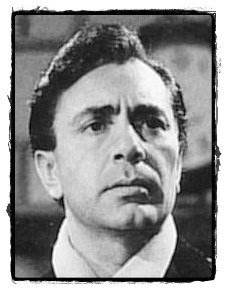
An excerpt from his biography:

'Balraj's association with Kashmir, starting from the early thirties, was to become deep and intimate. Kashmir became for him a kind of second home. He revelled deeply in its idyllic surroundings, long hikes, long swims in the lakes, and mountain-climbing. Kashmir was to become for him a place of deep personal attachments. It was here that he wrote some of his charming little poems and stories. It was also to become a field for his cultural and literary activities in the years to come.'

In the same book, Bhisham Sahni also relates how his brother stunned an audience unsympathetic to the Kashmiri freedom struggle against the Dogra rule by making the following observation:

'Why, all the purse-strings in the state are either in the hands of the Maharaja or the Punjabi traders who do not belong here and who exploit the local inhabitants.'

An incident in Kashmir made a lasting impact on Balraj Sahni. He describes it in this excerpt from his convocation address at Jawaharlal Nehru University in 1972.

'I'd like to tell you about an incident which took place in my college days and which I have never been able to forget. It has left a permanent impression on my mind.

I was going by bus from Rawalpindi to Kashmir with my family to enjoy the summer vacation. Half-way through we were halted because a big chunk of the road had been swept away by a landslide caused by rain the previous night. We joined the long queues of buses and cars on either side of the landside.

Impatiently we waited for the road to clear. It was a difficulty job for the P.W.D. and it took some days before they could cut a passage through. During all this time the passengers and the drivers of vehicles made a difficult situation even more difficult by their impatience and constant demonstration. Even the villagers nearby got fed up with the high-handed behaviour of the city-walas.

One morning the overseer declared the road open. The green- flag was waved to the drivers. But we saw a strange sight. No driver was willing to be the first to cross. They just. stood and stared at each other from either side. No doubt the road was a make-shift one and even dangerous. A mountain on one side, and a deep gorge and the river below. Both were forbidding. The overseer had made a careful inspection and had opened the road with a full sense of responsibility. But nobody was prepared to trust his judgment, although these very people had, till yesterday, I accused him and his department of laziness and incompetence.

Half an hour passed by in dumb silence. Nobody moved. Suddenly we saw a small green sports car approaching. An Englishman was driving it; sitting all by himself. He was a bit surprised to see so many parked vehicles and the crowd there. I was rather conspicuous, wearing my smart jacket and trousers. "What's happened?" he asked me.

I told him the whole story. He laughed loudly, blew the horn and went straight ahead, crossing the dangerous portion without the least hesitation.

And now the pendulum swung the other way. Every body was so eager to cross that they got into each other's way and created a new-confusion for some time. The noise of hundreds of engines and hundreds of horns was unbearable.

That day I saw with my own eyes the difference in attitudes between a man brought up in a free country and a man brought up in an enslaved one. A free man has the power to think, decide, and act for himself. But the slave loses that power. He always borrows his thinking from others, wavers in his decisions, and more often than not only takes the trodden path.

I learnt a lesson from this incident, which has been valuable to me. I made it a test for my own life. In the course of my life, whenever I have been able to make my own crucial decisions, I have been happy. I have felt the breath of freedom on my face. I have called myself a free man. My spirit has soared high and I have enjoyed life because I have felt there is meaning to life.'

So there it is. A life lesson from Balraj Sahni.

Biography : Balraj, my brother (National biography series), by Bhishma Sahni. National Book Trust, India, 1981.
Autobiography: Link
1972 JNU Convocation Address : Link
Mountaineering in Kashmir

Published / by Jehangir

I keep blogging about my love for mountains. Folks that follow this blog may have figured out that I am an avid reader of mountaineering books. This post is about little known facts about mountain expeditions in Kashmir, highest peaks and first ascents.

The first time that a man climbed a mountain peak was probably the ascent of Mount Haemus by Philip of Macedon (238 BC – 179 BC). He is more famous as the father of Alexander the Great. Eleven centuries later, the Italian poet Petrarch climbed Mont Ventoux in France in 1336. It was the first recorded mountain ascent in history.

Another five centuries would elapse before Dr. Michael-Gabriel Paccard, and Jacques Balmat claimed the first ascent of Mont Blanc in 1786. The duo pioneered the modern sport of mountaineering which culminated in Tenzing and Hillary achieving the ultimate prize – the pinnacle of Mount Everest, the highest mountain in the world, in 1953.

Throughout the 19th century, the British Raj conducted the Great Trigonometric Survey primarily to demarcate British territories in India. Another mandate of the survey was to accurately measure the heights of Himalayan peaks.

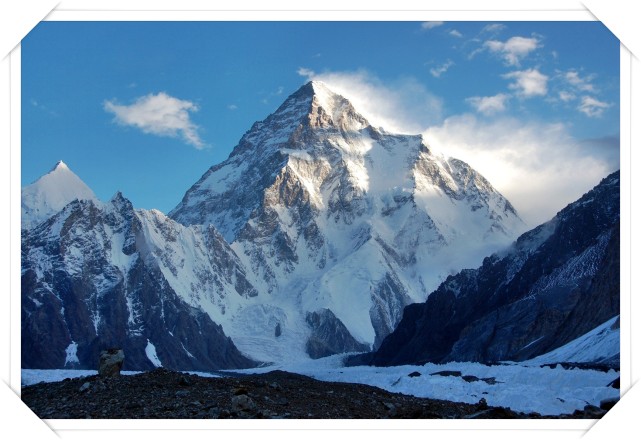
George Montgomerie of the Royal Engineers conducted the Kashmir series of the Great Trigonometric Survey between 1855 and 1864. In 1856 Montgomerie observed from Harmukh "two fine peaks standing very high above the general range" and recorded them as "K1" and "K2" for Karakoram 1 and Karakoram 2.

K1 was named "Masherbrum" after its local name as per convention but K2 remained unnamed. K2 (/8,611m/28,500ft) was confirmed by the survey as the second highest peak in the world and the highest in undivided Kashmir.

K2

K2

In the pre-war years most expeditions to Nanga Parbat and to K2 and the other giants of the Karakoram would start from Kashmir. In 1909, an Italian expedition under the leadership of Luigi Amadeo Giuseppe (Duke of Abruzzi), the grandson of King Victor Emmanuel II of Italy, reached Kashmir to mount an expedition to K2. Vittorio Sella, a photographer with the expedition took a series of mountain photographs that are regarded as some of the finest ever made.

Sella

Vittorio Sella's famous book of Himalayan Photographs

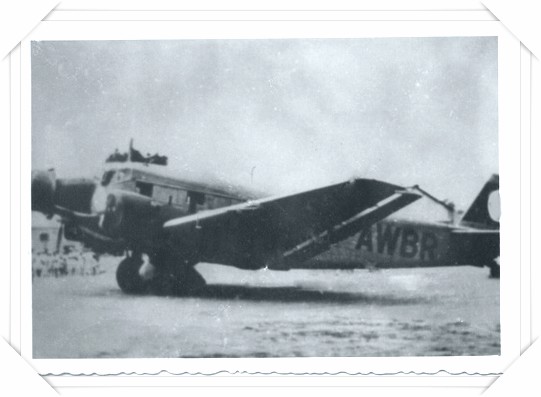
In the pre-war years, Kashmir was the staging point for expeditions, especially by German teams, to Nanga Parbat, the world's ninth highest peak (8,126 meters /26,660 ft). In 1938 a German expedition led by Paul Bauer was innovatively supplied by air by a Junkers Ju 52 stationed in Srinagar. Major Kenneth Hadow of Hadow Mills and Tyndale-Biscoe School fame also accompanied the expedition.

Junkers

The Junkers Ju 52 was a familiar sight in war movies, most memorably the opening scene of "Where Eagles Dare"

Ju

This remarkable photograph shows a Junkers Ju 52 (D-AWBR) at Srinagar airfield in 1938.The swastika on the tail has been removed in this photograph but can be seen clearly here.

At the outbreak of war in 1939, Heinrich Harrer was in Kashmir as a member of a German expedition planning an attempt on the still unclimbed Nanga Parbat. He was arrested and imprisoned by the British in a concentration camp in Dehradun but managed to escape to Tibet. Harrer recorded the adventure in his classic book, Seven Years in Tibet.

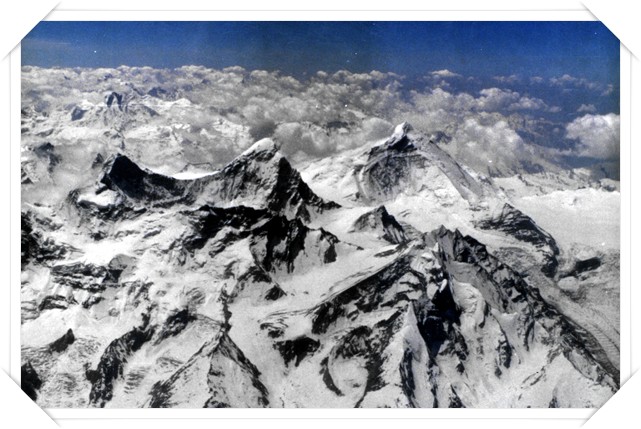
After partition and various wars, the highest point remaining within Kashmir is the Nun Kun massif (Nun 7,135 m /23,409 ft) in the Zanskar Range. An Italian mountaineer, Count Mario Piacenza, made the first ascent of Kun in 1913. The first ascent of Nun was achieved in 1953 by a French-Swiss-Indian-Sherpa team led by Bernard Pierre and Pierre Vittoz.

Nun

Nun Kun from the air (late 1980s)

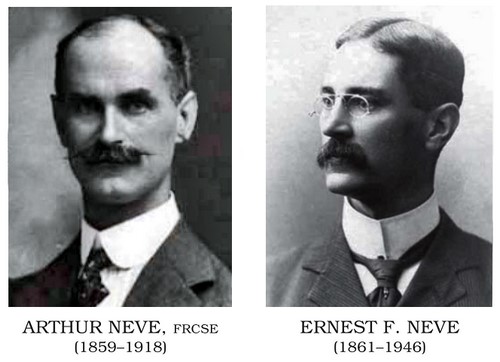
The famous medical missionary Neve brothers explored the Nun Kun massif several times in the early years of the 20th century.

The

The Neve brothers were intrepid explorers and claimed the first ascents of most of the peaks around the Kashmir Valley including Harmukh, Kolahoi, Trathkuti (Tatticooti), Sunset Peak, Rajdain, Sachkach among others.

Harmukh

Harmukh & Gangabal (late 1980s)

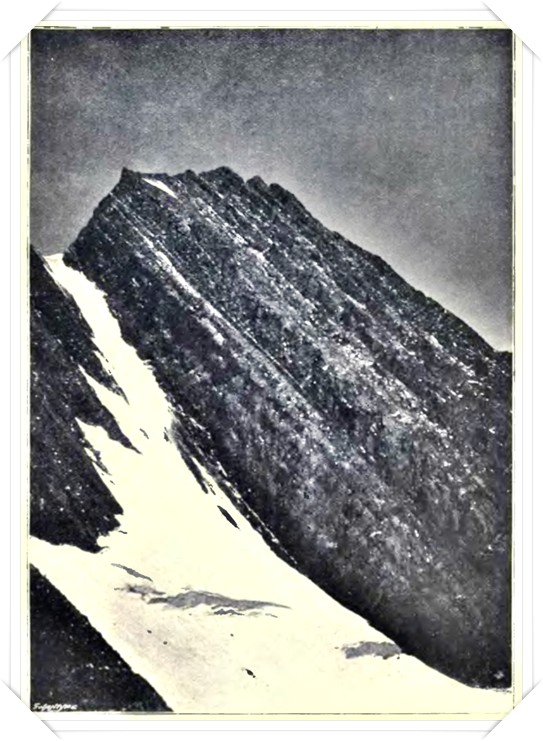
Tatticooti

Trath Kuti (Tatticooti)


First Ascents by the Neve Brothers

Kolahoi 17799 ft – E Neve/K Mason 1912
Haramukh (Western Peak) – A Neve/E Neve 1887
Haramukh (Eastern Peak) 16900 ft – A Neve/G Millais 1899
Tatticooti (Trathkuti) 15560 ft – E Neve/C E Barton 1901
Sunset Peak – A Neve/E Neve
Rajdain Peak – A Neve/E Neve
Sachkach Peak – A Neve/E Neve

First Ascents of Other Peaks in Kashmir:

Amarnath Peak 16427 ft – W H Johnson 1856
Haramukh (Station Peak) 16872 ft – T Montgomerie 1856
Pinnacle Peak 22800 ft – W Workman/F Workman 1906
Kun 23218 ft – M Piacenza – 1913
Valehead Peak 15528 ft – L Watts 1933
Kolahoi (South Face) – Hunt/Brotherhood 1935
Thajiwas 15928 ft – J Waller 1937
Adventurers Peak 17134 ft – C W F Noyce 1944
Mosquito Peak 15150 ft – C W F Noyce 1944
Umbrella Peak 15700 ft – Noyce/Jones 1944
Sentinel Peak 15118 ft – J A Jackson 1945
Arrow Peak 15850 ft – Jackson/Buzzard 1945
Blade 15850 ft – Jackson/Buzzard 1945
Crystal Peak 13400 ft – Jackson/Tripp/Levy 1945
Cefn Carnedd 15750 ft – Buzzard 1945
Nun 23409 ft – B Pierre/P Vittoz 1953
Nanga Parbat 26660 ft – Hermann Buhl 1953
K2 28500ft – L Lacedelli/A Compagnoni 1954
Sekiwas Peak 15404 ft – Unknown

Update 2013: On 19th May 2013, Rafiq Malik became the first Kashmiri to summit Mount Everest, after becoming the first to climb an 8000er in 2011. <Mount Manaslu (8163m) the eighth highest peak of the fourteen 8000m peaks in the world>

Update 2015:The 7.9 magnitude earthquake that devastated Nepal in April 2015 claimed 18 lives at the Everest base camp, making the event the deadliest disaster in Everest's history.

Among the victims was 49-year old Renu Fotedar of the Dreamers Destination team who would have become the first Kashmiri-born woman to climb Mount Everest.

R.I.P Ms Fotedar. We salute your bravery.

Update 2019:On 22nd May 2019 Nahida Manzoor became the first Kashmiri woman to scale Mount Everest, the world’s highest peak.

Motorsport in Kashmir

Published / by Jehangir

The Jhelum Valley Cart Road from Kohala to Baramulla, then famous as 'the most wonderful mountain road in the world', was completed in 1889 and was extended to Srinagar in 1897. Prior to the advent of the automobile in Kashmir, circa 1915, travellers to Kashmir made the journey in a two-horse four-seater tonga or a single-horse two-seater ekka.
In 1922, public transport was allowed on the Banihal Cart Road, which connected Srinagar with Jammu.

Traffic across the Banihal Cart Road

It was the Maharaja's of Kashmir (surprise, surprise) who owned the first cars in the Valley. During the 1920's Maharaja Hari Singh put together a collection of custom-made Rolls-Royce cars including a 1925 Barker Tourer, 1927 Windovers Limousine and a 1929 Thrupp & Maberly Tourer.

In the late 1920s, the Northern Motor Company, headquartered in Rawalpindi, opened a showroom in the Ganda Singh Building in Lal Chowk. They sold small four-cylinder Chevrolet tourers to local customers for a few thousand rupees.


Chevrolet Tourer on the Jhelum Valley Cart Road

From an endurance point of view the greatest motor adventure was the 1931 Citroën-Haardt Trans-Asiatic Expedition. The achievement of crossing the Himalayas between Srinagar and Gilgit over a pony track across the Burzil Pass (13775 ft) will probably never be surpassed.


Georges-Marie Haardt and his team set out for China from Srinagar on the 12th of July 1931 in specially designed Citroën Kegresse half-tracks. This expedition marked the first motorised crossing of the Greater Himalaya range.


This famous photograph from the Citroën-Haardt Expedition has inspired book covers and movie posters.


Here is a video of the expedition on YouTube. Watch out for 2.15:

More motor stuff next time. Enjoy !