Category Archives: General

Radio Blues

Published / by Jehangir

Over the years cellphones have committed virtual genocide.

A snap list of victims would include (alphabetically) address books, airline tickets, alarm clocks, barcode scanners, board games, books, business cards, cable tv, calculators, calendars, camcorders, cameras, compasses, credit cards, ebook readers, flashlights, GPS devices, landline phones, laptops, measurement devices (light meters, measuring tapes, thermostats, timers), movie theatres, newspapers, notepads, paper money, photo albums, physical maps, portable gaming devices, portable music and video players, radios, remote controllers, scanners, sketchpads, snail mail, usb thumbdrives, voice recorders, walkie talkies, webcams, wired internet and wristwatches.

Most of these may die unsung but I feel a twinge of sadness for radio.

I’d sit alone and watch your light
My only friend through teenage nights
… Radio, what’s new?
Radio, someone still loves you*

I read somewhere that the first radio available to the public in Kashmir was a Sky Champion set manufactured by the Hallicrafters Company in Chicago, USA and marketed by Lyra & Co in Lal Chowk.

I was unable to confirm that these radios were actually war surplus receivers with the transmitter removed but the original advertisement is quite suggestive.

Apparently in those days a licence was needed to own a radio set with annual stamps required from the post office!

In the seventies I grew up listening to a relentless barrage of Hindi songs on a leather-covered Philips Commander transistor belonging to the retainer/dastango mentioned in an earlier post. Even today I try to impress my kids (as if !) by identifying old Hindi hits just from the song intro.

In the eighties I managed to get my hands on a Trans-Oceanic transistor radio that had belonged to my father. The superbly-crafted Zenith Trans-Oceanic Royal 1000 has been described as the ‘royalty of radios.’ IMHO, the ‘Rolls Royce of radios‘ would be an equally apt description.

Upon turning a knob the whole dial cylinder would cycle between bands with a soul-satisfying thunk – the effect was akin to James Bond revolving the number plates on his Aston-Martin. The superb reception and separation of channels in the Trans-Oceanic opened up the joys of shortwave surfing. I became a DXer tuning into the BBC World Service, Radio Deutsche Welle, Voice of America (Billboard charts!) et al while keeping my connection to Hindi oldies alive with Chaya Geet and Binaca/Cibaca Geet Mala on Radio Ceylon.

Radio almost faded to extinction in the nineties and the naughts till the FM revival. I did attempt sporadic shortwave surfing on the ubiquitous Sony digital radios (de rigueur for any one with a relative in the Middle East) but the experience was never the same. I exchanged mine for an iPod which was swiftly rendered obsolete by the iPhone 🙁

Radio/Transistor sets may be history but fortunately FM (and USB drives) saved one gadget from oblivion – the car FM radio. In Kashmir thousands are tuning into the plethora of new FM Radio channels (and annoying RJ’s) on their morning drives. Future generations are thankfully no longer in danger of missing out on the joy of a favourite song playing unexpectedly on the radio – as opposed to the ho-hum availability of the MP3 on one’s hard drive.

You had your time, you had the power
You’ve yet to have your finest hour
Radio….*

*Queen – Radio Ga Ga

On the Importance of Listening

Published / by Jehangir

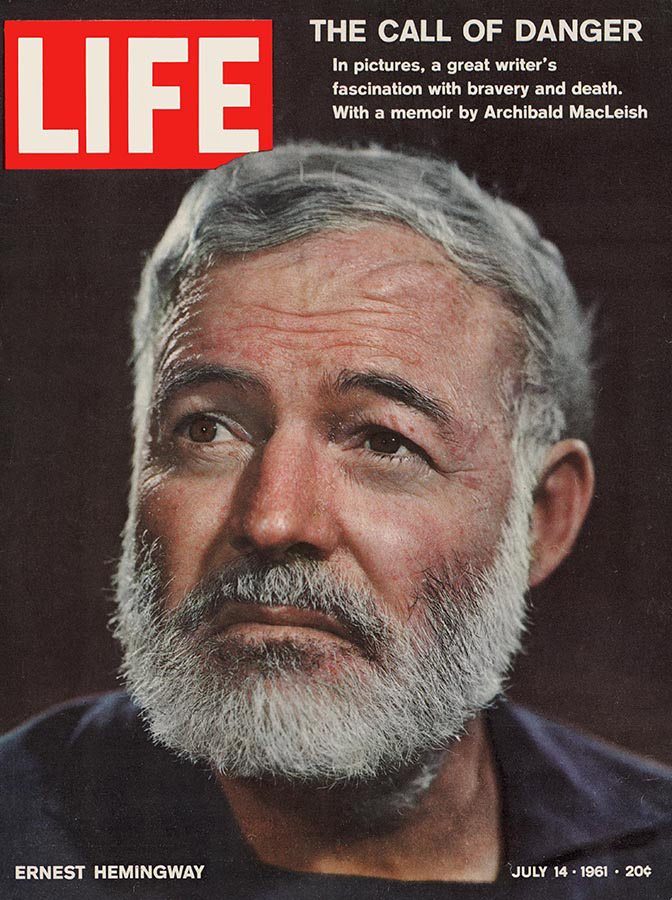
Besides acquiring fame/notoriety as a journalist, comrade-in-arms, traveller, hunter and la dolce vita aficionado, Ernest Hemingway was one of the most influential writers of the 20th century. Even though his larger-than-life personality combined with a Pulitzer Prize and a Nobel Prize in Literature* made him impossible to ignore, yet Hemingway felt compelled to admonish:

‘When people talk listen completely. Don’t be thinking what you’re going to say. Most people never listen.’

Islam has rules of etiquette and a moral code involving every aspect of life as defined by Shaykh Abdul-Fattaah Abu Ghuddah in his comprehensive book on Islamic Manners. The learned scholar refers to the importance of learning how to listen by quoting Ibrahim bin Al-Junaid :

‘learn the art of listening as you learn the art of speaking. Listening well means maintaining eye contact, allowing the speaker to finish the speech, and restraining yourself from interrupting his speech.’

The honourable Tabi‘i** Ata Ibn Abi Rabah, the first Imam of Mecca related:

‘A young man would tell me something that I may have heard before he was born. Nevertheless, I would listen to him as if I had never heard it before.’

The spiritual head of Tibetan Buddhism, the Dalai Lama says:

‘When you talk, you are only repeating what you already know. But if you listen, you may learn something new.’

This post was inspired by a quote I came across on the internet that neatly summarises all of the above thoughts:

Are you really listening, or just waiting to talk?
Trust your intellect, open your mind.
Don’t prefabricate your responses.
Don’t try to showcase your wit.
Listen and respond in the moment.
You’ll be surprised at how much more you’ll learn.

*’The Old Man and the Sea’ (1953), which is one of my favourite books and films (starring Spencer Tracy).
** The Tabi‘un ( ‘followers’ or ‘successors’) were the second generation of muslims who gained knowledge directly from the Sahaba (Companions of the Prophet [PBUH]).

Serendipity in the Himalaya

Published / by Jehangir

After a lifetime of travel guided by Lonely Planet, I casually picked up a used copy of a Bradt travel guide at a second-hand bookshop in Ladakh.

In harmony with the mystical Himalaya, serendipity awaited in the natural history section of the book.

The timing too was perfect because my younger nephew was wondering whether his cousins were pulling his leg about the Birds of Kashmir website being a family effort.

The book itself is a highly competent travel guide to Kashmir & Ladakh. Here is an excerpt from the Bradt website:

Standing on the veranda looking down across Dal and Nagin lakes with Hari Parbat peeking up through the mist, the sunlight glinting on the water as a solitary shikara paddles by, brings a lump to your throat. If there is heaven on earth, can it be anywhere else but here?

It may be a cliché, but there’s something in Jammu and Kashmir for everyone. You can marvel at the views from the roof of the world at Khardung La, staring down on mountain peaks and glaciers; stroll through the Eden-like Shalimar Gardens, inspired by the Qu’ranic image of paradise; take a shikara ride with your own Kashmiri gondolier through the lotus-bedecked lakes of Srinagar; and join the Buddhist monks at Thiksey Monastery for early morning prayers or meditation by candlelight.

Adrenalin junkies can scale unclimbed peaks, trek along frozen rivers, heli ski at Gulmarg, raft on the mighty Indus River or paraglide above the forests and slopes of Pahalgam; holiday makers looking for a more relaxing time can read and watch the world go by from the veranda of a cedar-wood houseboat, learn yoga, shop for carpets and pashminas and indulge in all manner of culinary delights.

Encompassing a vast stretch of land from the lush Kashmir Valley in the west, to the striking mountains and epic wilderness of Ladakh and Zanskar, the area now covered by the Indian state of Jammu and Kashmir has long astounded visitors with its beauty. It was the favourite destination of Mughal kings, British bureaucrats and tourists overlanding along on the hippie trail: they proclaimed it heaven on earth, and we’re rather inclined to agree.

Enjoy!