Radio Blues

Published / by Jehangir

Over the years cellphones have committed virtual genocide.

A snap list of victims would include (alphabetically) address books, airline tickets, alarm clocks, barcode scanners, board games, books, business cards, cable tv, calculators, calendars, camcorders, cameras, compasses, credit cards, ebook readers, flashlights, GPS devices, landline phones, laptops, measurement devices (light meters, measuring tapes, thermostats, timers), movie theatres, newspapers, notepads, paper money, photo albums, physical maps, portable gaming devices, portable music and video players, radios, remote controllers, scanners, sketchpads, snail mail, usb thumbdrives, voice recorders, walkie talkies, webcams, wired internet and wristwatches.

Most of these may die unsung but I feel a twinge of sadness for radio.

I’d sit alone and watch your light
My only friend through teenage nights
… Radio, what’s new?
Radio, someone still loves you*

I read somewhere that the first radio available to the public in Kashmir was a Sky Champion set manufactured by the Hallicrafters Company in Chicago, USA and marketed by Lyra & Co in Lal Chowk.

I was unable to confirm that these radios were actually war surplus receivers with the transmitter removed but the original advertisement is quite suggestive.

Apparently in those days a licence was needed to own a radio set with annual stamps required from the post office!

In the seventies I grew up listening to a relentless barrage of Hindi songs on a leather-covered Philips Commander transistor belonging to the retainer/dastango mentioned in an earlier post. Even today I try to impress my kids (as if !) by identifying old Hindi hits just from the song intro.

In the eighties I managed to get my hands on a Trans-Oceanic transistor radio that had belonged to my father. The superbly-crafted Zenith Trans-Oceanic Royal 1000 has been described as the ‘royalty of radios.’ IMHO, the ‘Rolls Royce of radios‘ would be an equally apt description.

Upon turning a knob the whole dial cylinder would cycle between bands with a soul-satisfying thunk – the effect was akin to James Bond revolving the number plates on his Aston-Martin. The superb reception and separation of channels in the Trans-Oceanic opened up the joys of shortwave surfing. I became a DXer tuning into the BBC World Service, Radio Deutsche Welle, Voice of America (Billboard charts!) et al while keeping my connection to Hindi oldies alive with Chaya Geet and Binaca/Cibaca Geet Mala on Radio Ceylon.

Radio almost faded to extinction in the nineties and the naughts till the FM revival. I did attempt sporadic shortwave surfing on the ubiquitous Sony digital radios (de rigueur for any one with a relative in the Middle East) but the experience was never the same. I exchanged mine for an iPod which was swiftly rendered obsolete by the iPhone 🙁

Radio/Transistor sets may be history but fortunately FM (and USB drives) saved one gadget from oblivion – the car FM radio. In Kashmir thousands are tuning into the plethora of new FM Radio channels (and annoying RJ’s) on their morning drives. Future generations are thankfully no longer in danger of missing out on the joy of a favourite song playing unexpectedly on the radio – as opposed to the ho-hum availability of the MP3 on one’s hard drive.

You had your time, you had the power
You’ve yet to have your finest hour
Radio….*

*Queen – Radio Ga Ga

The Lost Pavilions

Published / by Jehangir

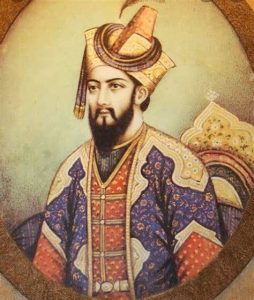
The founder of the Mughal dynasty, Babur, complained in his autobiography
that in Hindustan “except their large rivers and their standing-waters which flow in ravines or hollows (there are no waters). There are no running-waters in their gardens or residences.”

No wonder the overjoyed Great Mughals laid out hundreds of gardens in Kashmir. Of the few that have survived into present times, the remarkable ones are Nishat, Shalimar, and Cheshma Shahi – a series of exquisite gardens on the foothills of the Zabarvan Hills overlooking the Dal Lake in Srinagar – and Verinag and Achabal in South Kashmir.

Morning in the shadow of the Nishat Bagh,
evening in the breezes of the Naseem,
Shalimar and its tulip fields,
these are the places of pleasure in Kashmir and none else.

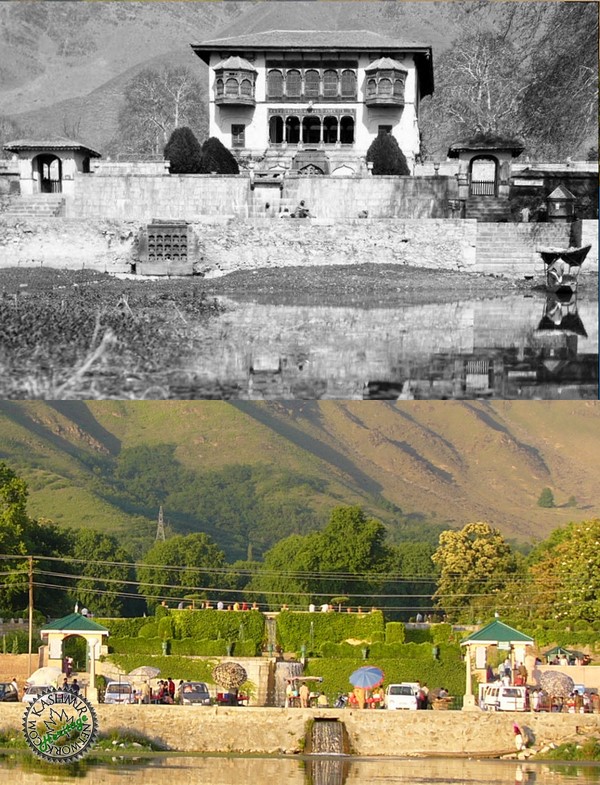
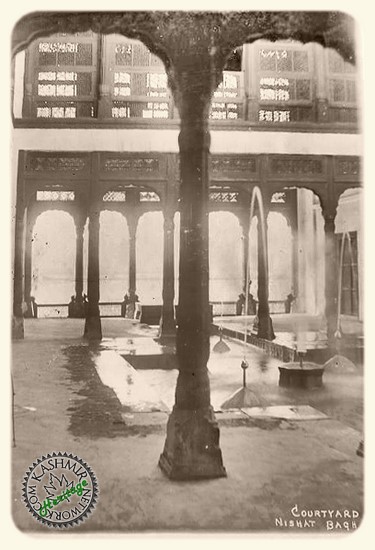
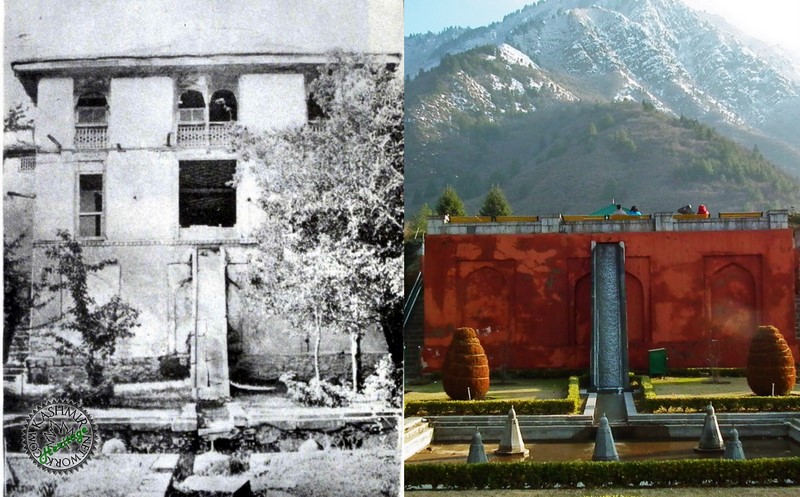
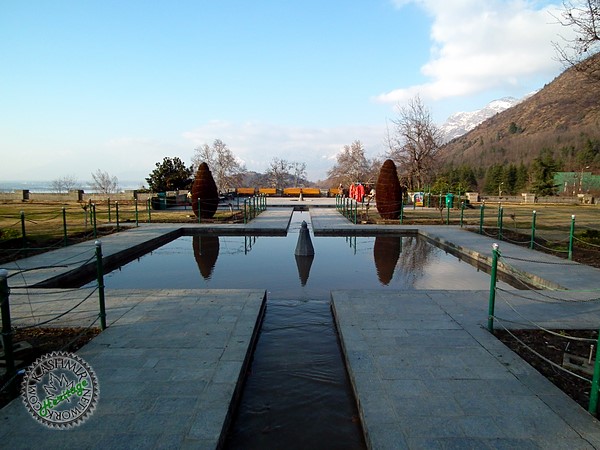
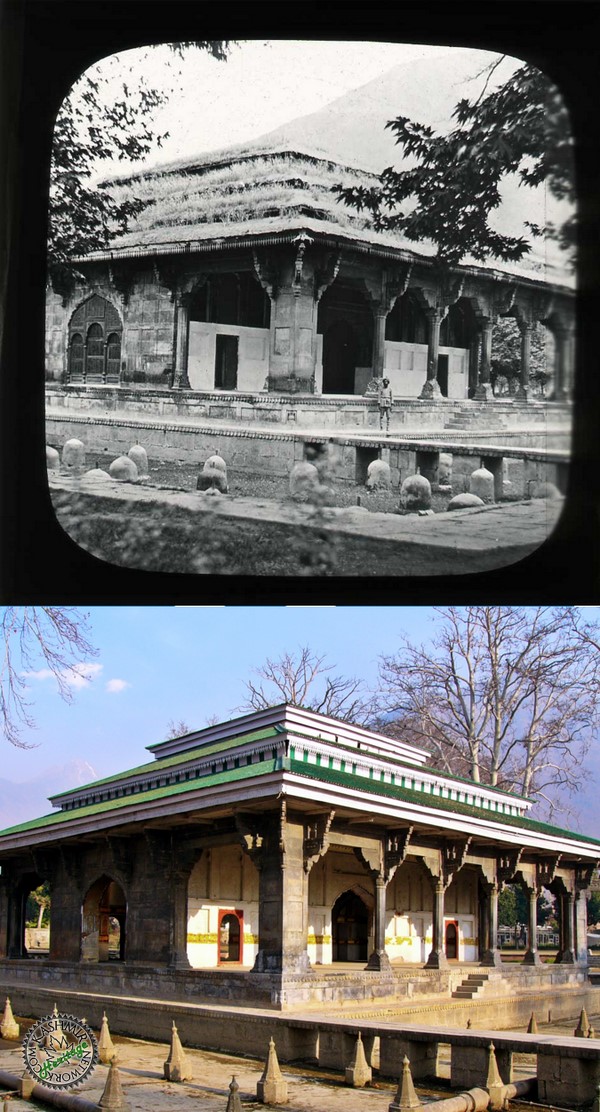
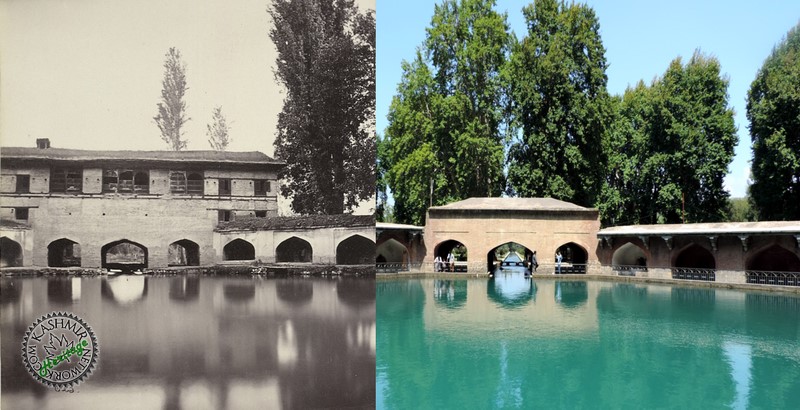
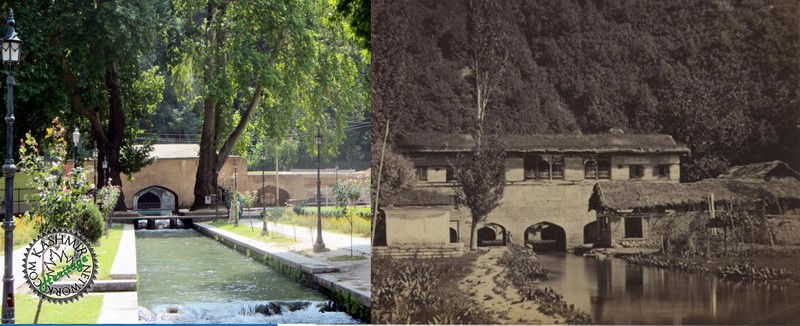
Millions of visitors throng these gardens every year and countless photographs find their way into print and are posted online. Very few people however know that these gardens looked quite different till just a few decades ago. It is interesting to compare photographs from the pre-independence era with current images of Kashmir’s famed Mughal gardens.

Nishat (The Garden of Delight)
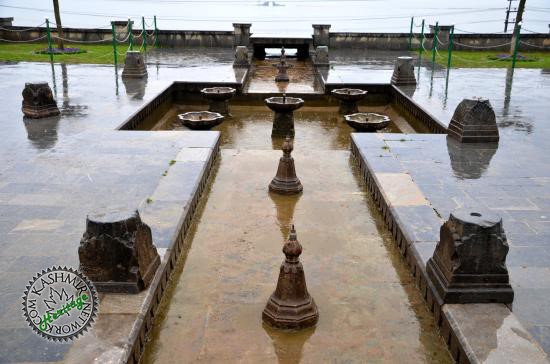
At Nishat, stone bases still exist of the fluted wooden columns of a baradari erected on the third terrace in the post-Mughal period. Later the first terrace accessible from the lake was converted into a metalled road with the result that the baradari would have been on the second terrace before it was razed.

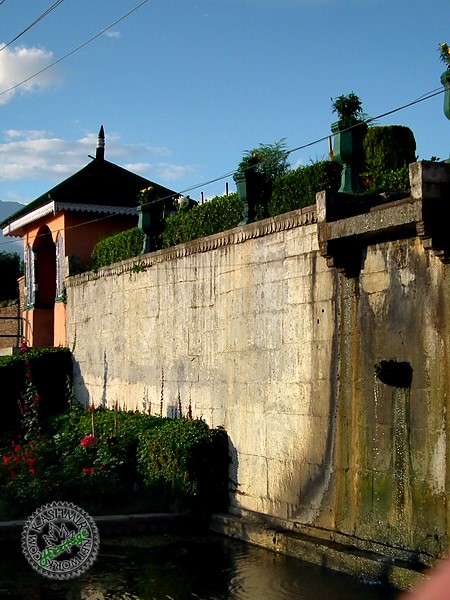
The stone steps leading to the lake have been dismantled and only the lions-head fountain still gushes in the first terrace while the forgotten chini khana is a hidden and lightless witness to past glories. In the heyday of the Mughals the twinkling of its lamps under a shimmering sheet of water would have guided boats to the Nishat Bagh at night.

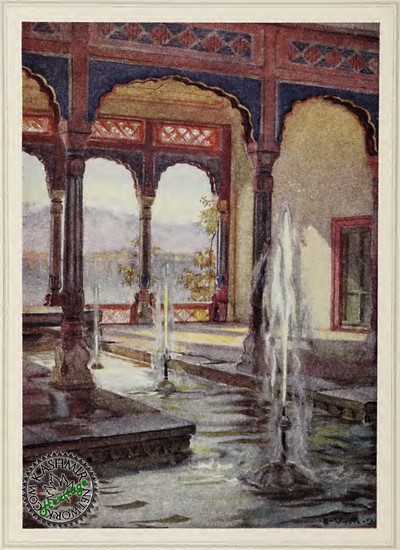
A strikingly accurate watercolour of the interior of the baradari by Constance Villers Stuart compared to an undated photograph.

Cheshma Shahi (The Royal Spring)
At Cheshma Shahi as you reach the first terrace via a steep flight of stone steps an inelegant post-Mughal baradari built on the second terrace has thankfully been dismantled opening up the magnificent vistas of the Dal and the Zabarvan range above the chadar.

Shalimar (The Abode of Love)
In Shalimar the traditional pinjra-kari partitions are missing altogether while the carved devri fountains are a marked improvement over the older ones. The unique burza pash has been replaced with a practical modern metal roof.

Verinag (Abode of the Naga King)
In Verinag, apartments on the first floor have been removed arguably improving the view from both sides – the pool and the watercourse.

Glossary:
*baradari Persian/Mughal pavilions traditionally had 12 entrance doors, three on each side lit. bara (twelve) dar (door).
*chini khana Tiered rows of arched niches behind a curtain of falling water that held flowers in the daytime and diyas (oil lamps) at night.
*chadar Stone ramps engraved with varying scale-like patterns to form little wavelets, each design producing a distinctive gushing sound.
*pinjra-kari Wooden lattice work
*devri Local grey limestone extensively used in Kashmir. Stone was reputedly worked to a degree artistically comparable to marble by artisans in ancient Kashmir.
*burza pash A roof of birch bark covered with a layer of soil that permits the growing of flowers especially red tulips (Gul-e-Lala) narcissi (nargis) and irises.

As usual we turn to Walter Lawrence, “Sometimes in the village one finds the roofs of the larger houses and of the shrines (ziarats) made of birch bark with a layer of earth above it. This forms an excellent roof, and in the spring the housetops are covered with iris, purple, white, and yellow, with the red Turk’s head and the Crown Imperial lilies. In the city nearly all the houses of well-to-do people are roofed with the birch bark and earth, so that looking down on Srinagar from the Hari-Parbat hill one sees miles of verdant roofing.