What is Wrong with this Picture?

Published / by Jehangir

My childhood was spent in and around the Dal Lake. I grew up in a house bursting with assorted cousins and post-school hours were devoted to exploration and fun – climbing up the Shankracharya hill, riding in 'borrowed' shikaras and dakotas, mass participation in games of football or 'birra' cricket, flying kites and gawking at visitors (tourists) being disgorged by huge buses on to the boulevard.

On rare occasions we would venture as far as the mysterious lanes of the Dalgate bazaar which, with its strong Central Asian flavour, seemed to have a fairytale aura to our young eyes.

Beyond the tonga stand lay smoky shops filled with huge sacks of wares peddled by turbaned and pheraned shopkeepers pulling languidly on their hookahs.

The flower-covered roofs of earlier times and the tonga stand of my childhood are long gone – unplanned 'progress' having doomed the area into 'modernity'.

So, decades on from the earlier photograph, what is wrong with this picture?

My take:

– Heritage buildings replaced by hodgepodge structures

– Ramshackle sheds and garish billboards obscuring the delicate architecture of the area

– Iredeemably ugly poles and overhead wires, and unmaintained switch boxes

– Handcarts and illegally parked cars and autorickshaws obstructing traffic

– Leftover building material on roads

Not in picture:

– Street hawkers blocking pedestrian access.

– Cows and sometimes horses blocking roads.

– Packs of feral dogs harassing passers-by.

– Garbage strewn on roads.

– Roads left un-repaired after digging for pipes/cables etc.

– Zero public toilet facilities.

It is not like that architectural heritage cannot be preserved and maintained.

Rebuilt Arts Emporium.

Restored Boathouse at Nagin Lake.

I feel that we need a project for soft loans and hand-holding for restoration of privately owned buildings so generations after us can enjoy these timeless works of art.

Dalgate, being the nerve centre of tourism in Srinagar, can be a priority area for preservation of heritage structures, efficient traffic control, ample parking facilities and cleanliness.

The lessons learnt here can be replicated across Srinagar city so it can live up to its name which historians tell us means 'city of wealth and beauty'.

P.S All those 'experts' who quote natural progress, market forces, tourism demands blah blah can compare wartime and modern-day Europe, some 70 years later:

Saving Water (and Ourselves)

Published / by Jehangir

In 1995, World Bank Vice President Ismail Serageldin said that the wars of the next century will be fought over water.

Here are some eye-openers:

– Only less than 1 percent of all water on Earth is suitable for use by humanity. The rest is either salt water or permanently frozen.

– 11% of the global population, or 783 million people, are still without access to improved sources of drinking water.

– Singapore recycles water from toilets and drains to meet its water demand.

The situation with bottled water is simply ridiculous.

– 3 liters of water is used to package 1 liter of bottled water!

– The bottles used to package water take over 1,000 years to bio-degrade and if incinerated, they produce toxic fumes.

In the USA, Sustainability Engineer Pablo Päster of triplepundit.com controversially calculated the environmental cost of a single bottle of Fiji Water thus:

'the manufacture and transport of that one kilogram bottle of Fiji water consumed 26.88 kilograms of water (7.1 gallons) .849 Kilograms of fossil fuel (one litre or .26 gal) and emitted 562 grams of Greenhouse Gases (1.2 pounds)'

While clean and safe drinking water is scarce in most of the developing world, Kashmir is blessed with generous water resources.

Fortunate as we are, we still waste too much of this precious resource. It is our responsibility as concerned individuals to reduce the wastage of water.

Rainwater harvesting is a simple method that can have a huge impact by reducing the demand on water for outdoor activities.

As per experts, 1 mm of rain on 1 square metre of roof area provides 1 litre of water.

As per NOAA data, Srinagar receives around 28 inches of rainfall per year.

Since I am metrically handicapped, this would mean that, if my calculations are correct;

1 inch of rain on 1 square foot of roof will provide 2.36 litres of water.

The potential to harvest rainwater for my house which has a roof area of approx 2500 sq.ft can be calculated using this Rainfall Calculator.

28 inches X 2500 sq. ft = 165182 litres per year

How awesome is that? One hundred and sixty-five thousand litres a year or approximately 450 litres of pure rainwater every day absolutely free.

While I was designing my home, I took care to construct the roof in a manner that would make it easy to collect and store rainwater.

Instead of an overdesigned roof, I have four simple valleys that act as virtual quarter funnels channeling rainwater to four collection spots where I can easily store or divert rainwater.

This 1000 litre tank waters my garden.

This 1000 litre tank maintains my lily pond.

The two other downspouts recharge my tubewell and will also be used to water my vegetable garden and to wash my car once I have the filter system in place.

Since most houses in Kashmir have a 'parnala' or rainwater gutter system, all we have to do is to divert the downspout into a storage tank and we can enjoy an abundant supply of fresh water for sustainable gardening plus the warm fuzzy feeling of being a concerned socially responsible citizen.

The responsibility of saving the world should not be limited to beauty pageant contestants only 🙂

A Tale of Three Schools

Published / by Jehangir

Last week my elder son Jamshed had to make a 'school history' presentation for the benefit of younger students at assembly. While preparing his speech he asked me why our school was called Burn Hall School.

Flashback to the 70s …..

A favourite teacher asked our class the same question in primary school. Nursing a huge desire to impress said teacher, I tracked down a senior cousin during recess. It was very uncool to be tailed by a younger sibling in school but I was willing to risk public humilation for a higher cause. Luckily my cousin let me off lightly. 'Yaar, everyone knows the old school hall burnt down.'

The teacher, however, was not as kind.

'Dont be stupid, no school hall ever burnt down. Who told you this rubbish? Its named after a river in England.'

The flush of humiliation still rankles as does the memory of classmates sniggering at my embarrassment.

Cut to present day …..

Jamshed had gone through the history section of his school diary and the school website but could not find any clues to the peculiar name of the school.

I knowledgeably proposed the 'river' hypothesis omitting any mention of smart-alecky cousins or unsympathetic teachers. A quick bit of googling revealed that the school was not named after any particular river but for 'burn', a generic Scottish term for a smallish river or largish stream.

We also learnt that there was an Abbottabad branch of the Burn Hall School. Though there is no interaction between the two schools, they share a common history.

Quote:

The school is named after an English Manor House which had a hall with a stream (burn) running through it, hence the name 'Burn Hall'

My teacher having saved me from a second dose of embarrasment almost four decades later, we managed to put together the following sequence of events:

The Mill Hill Missionaries, officially known as the St. Joseph’s Missionary Society of Mill Hill, are a Catholic missionary society founded in 1866 at Holcombe House in the Mill Hill locality of north London.

Having expanded their missionary activities to South Asia in 1875, the Mill Hill Missionaries took charge of the mission to Kashmir in 1884.

After successfully establishing St. Joseph's School at Baramulla in 1905 they founded another school called the Senior Cambridge School at Srinagar in 1942.

The new school was started in the building which currently houses the College of Education (formerly the Teacher's Training College) at Maulana Azad Road. (Incidentally I have many happy memories of the Teacher's Training College and its heritage buildings, especially it's well-stocked library, which I could access by virtue of my mother being the Principal.)

In the aftermath of the 1947 tribal invasion, the Mill Hill Missionaries moved to Pakistan and established a school called Burn Hall School in the Abbott hotel in Abbottabad under the Diocesan Board of Education, Rawalpindi.

The school motto was 'Quo non Ascendam', which in Latin means 'To what heights can I not rise.'
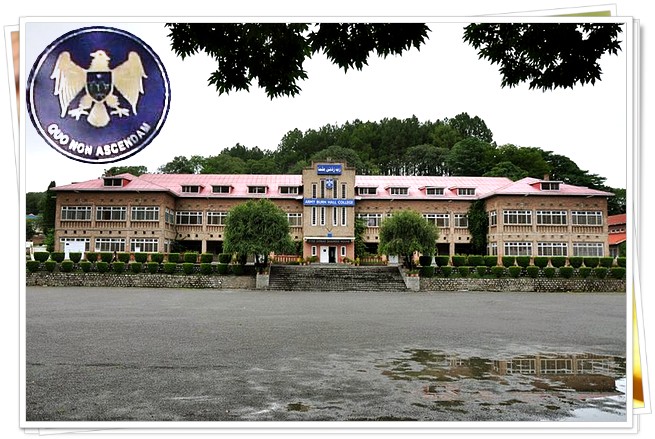
After a spell of nine years the Mill Hill Missionaries returned to re-establish their Srinagar school.

The new school, also called 'Burn Hall School', was started in April 1956 in a building called "The Willows" at Gupkar Road. Fr. J. Boerkamp was the founding father and the first Principal of the school which was established under the management of the Catholic Diocese of Jammu & Srinagar.

The school motto was 'Industria Floremus', which in Latin means 'In toil we shall flourish.'
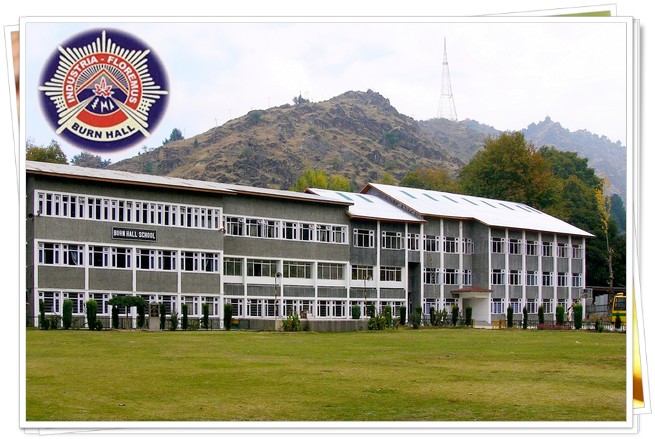
The Mill Hill Missionaries managed the Abottabad and Kashmir institutions till 1977.

In 1977, the charge of Burn Hall School in Kashmir was handed over to the Capuchin Fathers, while the Burn Hall School at Abbottabad was taken over by the Pakistan Army Education Corps and has since become a military style cadets institution known as the Army Burn Hall College and School.

The Capuchin Fathers inaugurated the new Burn Hall School complex in Srinagar in 1978 and the school celebrated its Silver Jubilee in 1981.

In 1990, the Montfort Brothers of Saint Gabriel took charge of the school for a contract period of 12 years.

The Catholic Diocese of Jammu & Srinagar took over the administration of Burn Hall School from the Montfort Brothers in 2001. Fr. Ivan Pereira is the current Principal of Burn Hall School in 2014.

Now that we are up to date with the history, why the name 'Burn Hall'?

In 1947, after shifting the school from Kashmir to Abbottabad it was renamed the Burn Hall School after the seminary in England where the Mill Hill fathers received their religious training. This seminary was housed in an ancient hall dating from 1821 in Croxdale, Durham county.

Croxdale is at the point where the river Browney joins the river Wear. On the banks of the latter stands the Burn Hall, designed by Ignatius Bonomi in the Gothic and Neo-Classical style for the wealthy Salvin family who had lived in the area since 1409.

In 1926, Burn Hall was sold to the Mill Hill Missionaries who used it to train boys as missionary priests at the Burn Hall seminary till 1995.
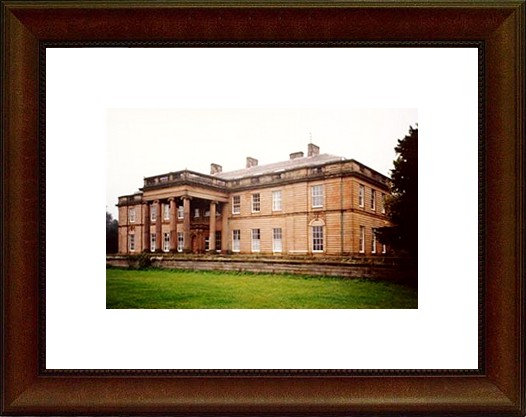
The building now serves as a private apartment block set within 72 hectares of the Burn Hall estate.

So teacher did know best.

'Burn Hall School' was named by its founding fathers after their own religious school housed in an ancient hall on the banks of a 'burn' called Wear in Croxdale, England.

No burnt-down halls anywhere in this tale.